PROCESS SERVER DAILY
process server tips
Topic hub — 32 articles
 process server tips
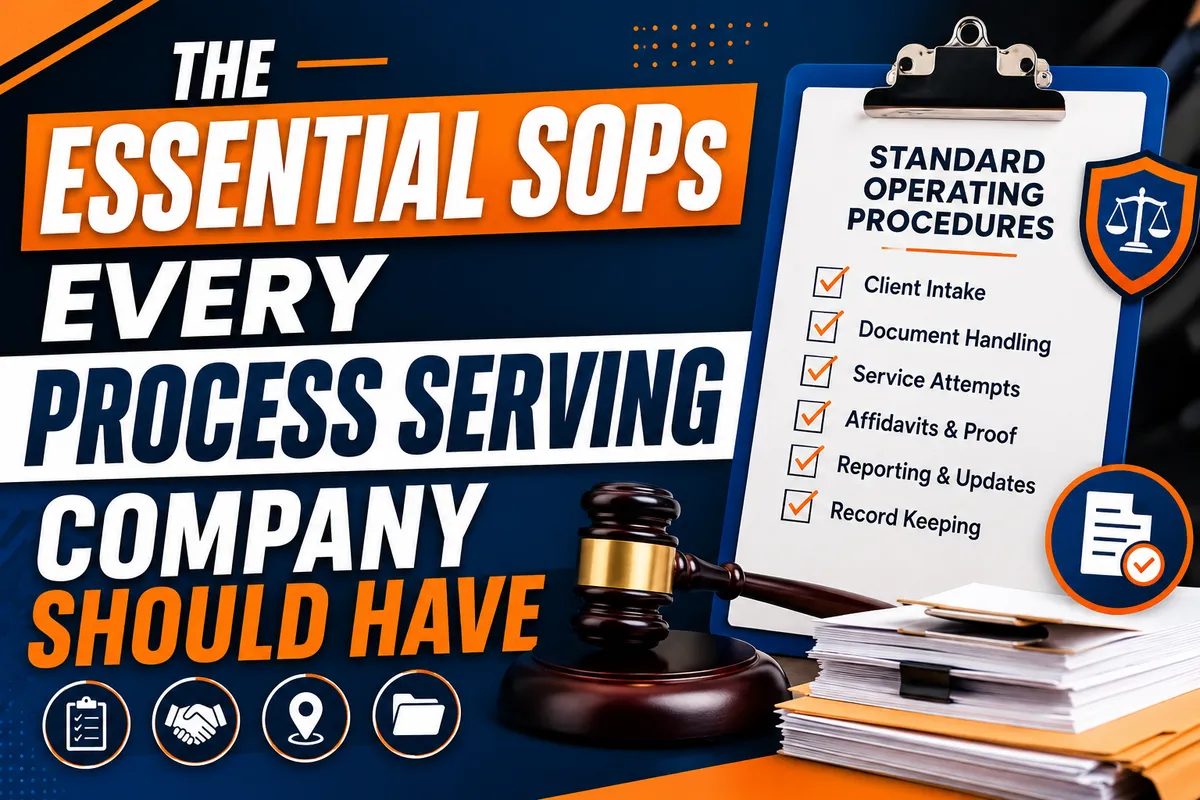
The Essential SOPs Every Process Serving Company Should Have
Standard Operating Procedures, commonly known as SOPs, are written documents that provide detailed instructions for completing recurring tasks. They create a structured framework that helps employees perform their responsibilities accurately, efficiently, and consistently. In the legal services industry, where deadlines, documentation, and compliance are critical, SOPs help ensure every assignment is handled according to established process server standard procedures.
 process server tips
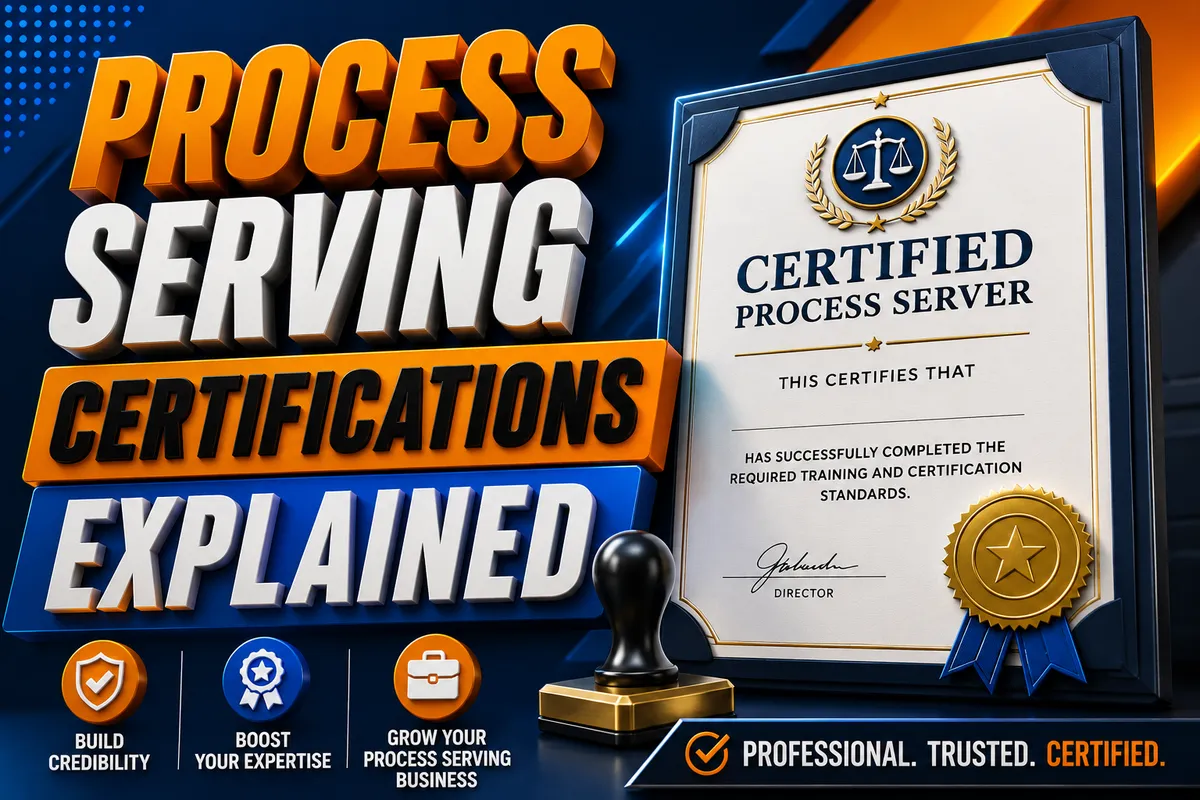
Process Serving Certifications Explained
The legal system depends on proper notification to ensure every party has an opportunity to respond to legal actions. This responsibility falls on process servers, who deliver legal documents such as summonses, complaints, subpoenas, writs, and other court papers according to applicable laws. Because proper service can directly affect the validity of a legal case, professionalism and legal knowledge are essential. As the legal field continues to evolve, the role of the process server has become increasingly important. Courts expect service to be completed accurately, documented thoroughly, and performed within the rules established by each jurisdiction. This is where process serving certification becomes valuable.
 process server tips
7 Reasons Your Service of Process May Be Delayed
Service of process is one of the most important steps in the legal system. Before a court case can move forward, the defendant must receive proper legal notice according to the applicable laws. When this step is delayed, court schedules may be affected, legal deadlines may be extended, and clients may experience unnecessary frustration.
 process server tips
Mistakes New Process Servers Make (And How to Avoid Them)
Process serving is a critical component of the legal system because it ensures individuals receive proper notice of legal proceedings. Courts rely on valid service of process to protect due process rights and move cases forward. New process servers often encounter obstacles that affect their success. Some mistakes are operational, while others involve legal compliance or personal safety. Understanding these challenges is one of the most important steps toward becoming a successful process server.
 process server tips
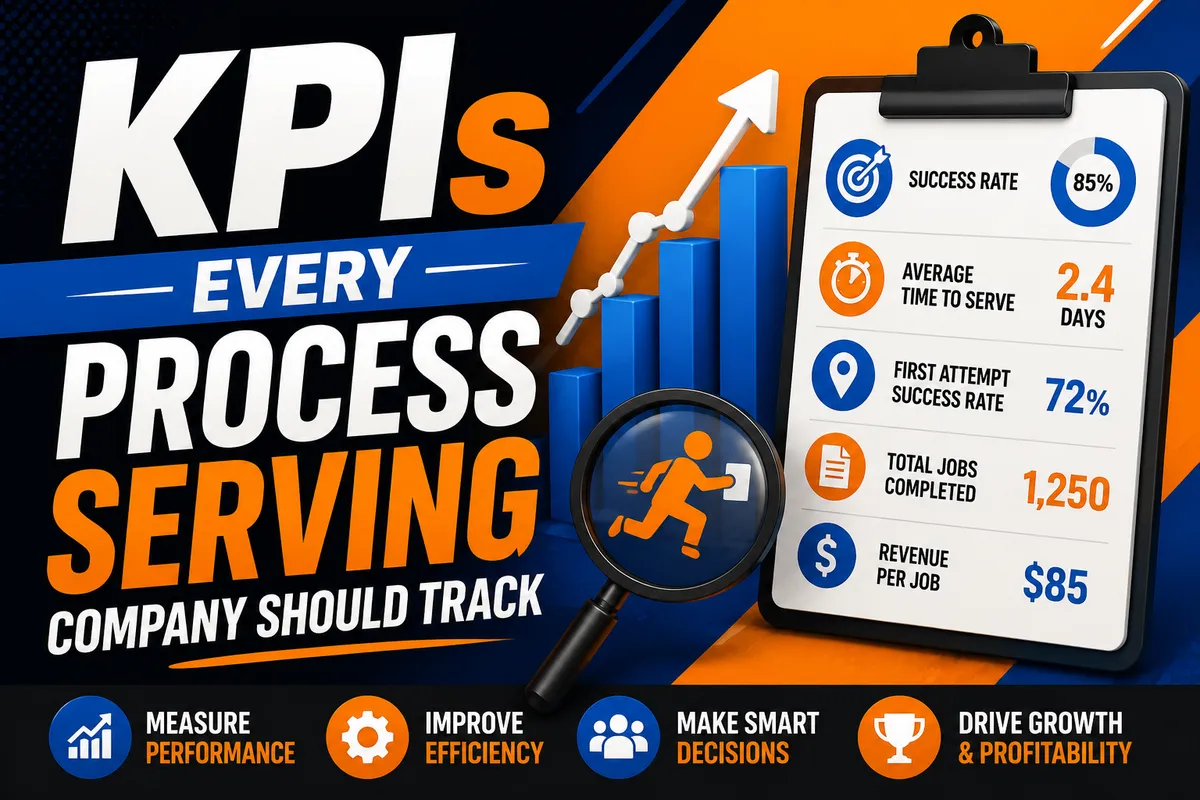
KPIs Every Process Serving Company Should Track
Success in the process serving industry depends on more than simply delivering legal documents. Every successful company needs to understand how efficiently it operates, how satisfied its clients are, and where improvements can be made. This is where process serving KPIs, or Key Performance Indicators, become essential.
 process server tips
The Role of IoT in Legal Field Services
The Internet of Things (IoT) is transforming industries around the world, and the legal profession is beginning to experience its benefits. As technology evolves, IoT in legal services is becoming an important part of how legal professionals manage cases, communicate with clients, and complete field operations more efficiently. For process servers, investigators, court filing specialists, and law firms, IoT provides a smarter way to connect people, devices, and information. Internet-connected devices can automatically collect, transmit, and organize data, reducing manual work while improving documentation and transparency.
 process server tips
How Heat Maps Can Improve Process Serving Routes
Heat maps provide a visual representation of service activity, allowing process servers to quickly identify areas with high concentrations of assignments, recognize service patterns, and make smarter routing decisions. Instead of relying solely on GPS navigation or manually planning routes, agencies can use data to improve scheduling, reduce travel time, and maximize productivity.
 process server tips
How Online Ordering Is Changing Process Serving
The legal industry continues to embrace digital transformation, and process serving is evolving alongside it. Traditional methods that relied on phone calls, emails, paper forms, and manual data entry are rapidly being replaced by modern digital solutions. One of the most significant advancements is the adoption of online ordering for process serving, which allows clients to submit service requests securely through web-based platforms at any time.
 process server tips
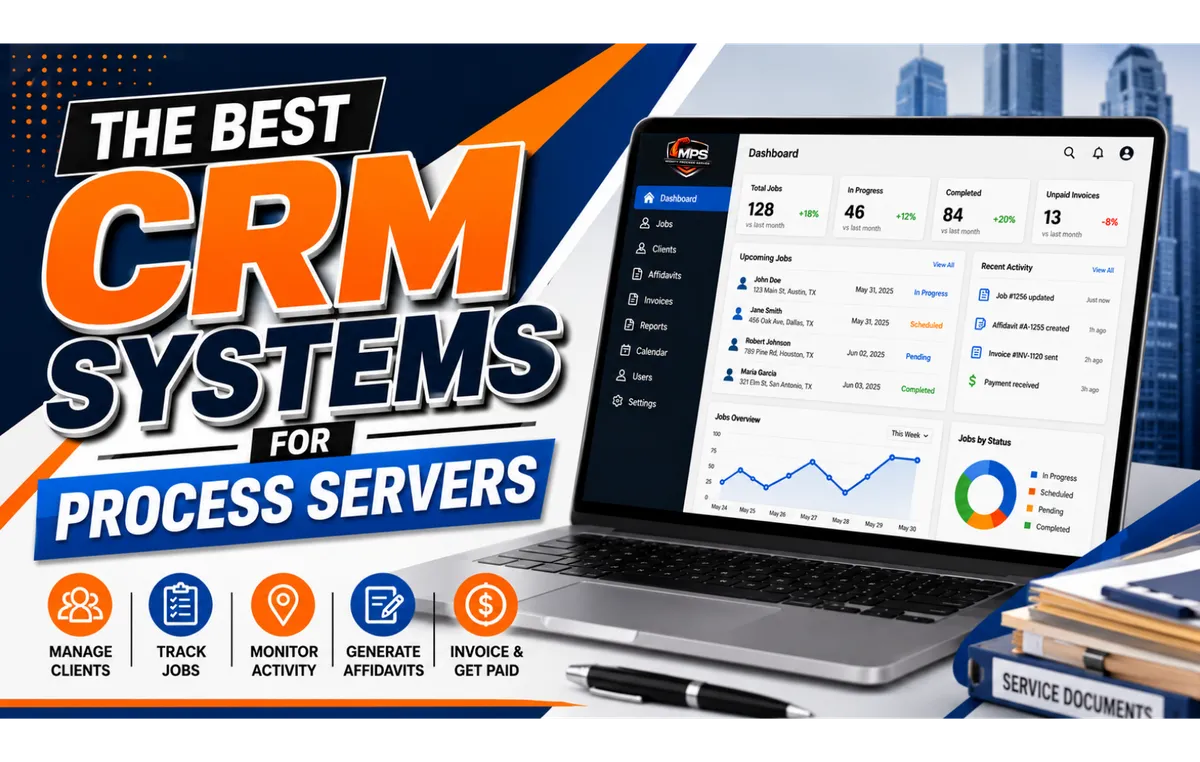
The Best CRM Systems for Process Servers
Success in the process serving industry requires much more than delivering legal documents. Process servers must manage client relationships, organize service requests, coordinate schedules, maintain accurate records, communicate with attorneys and law firms, generate affidavits, track invoices, and monitor business performance. As a business grows, handling these responsibilities with spreadsheets, emails, or paper files becomes increasingly difficult.
 process server tips
How Process Servers Help Property Managers Stay Compliant
Property management involves much more than collecting rent and maintaining buildings. Property managers are responsible for complying with numerous legal requirements that protect both property owners and tenants. From lease enforcement to eviction proceedings, every legal action must follow applicable laws and established procedures.
 process server tips
How Open-Source Intelligence (OSINT) Supports Skip Tracing
In today's digital age, intelligence gathering has expanded far beyond traditional methods. Open-source intelligence, commonly known as OSINT, refers to the collection and analysis of publicly available information to support investigations, verification, and decision-making.
 process server tips
Why Cybersecurity Matters in Process Serving
Cybersecurity in process serving involves protecting electronic data, legal documents, client communications, and business systems from unauthorized access, theft, and cyberattacks. Attorneys, law firms, corporations, and private clients trust process servers with confidential information that must remain secure throughout every stage of the service process.
 process server tips
What Every Litigation Paralegal Should Know About Process Serving
A strong litigation paralegal guide includes more than document preparation and case organization. It also requires a solid understanding of process serving basics, legal requirements, communication with process servers, and proper documentation. Working with experienced professionals helps attorneys move cases forward efficiently while protecting the rights of all parties involved.
 process server tips
What Law Firms Expect From Modern Process Servers
In today’s fast-moving legal environment, law firms expect more from process servers than basic document delivery. Modern process servers are now essential partners in litigation support, helping attorneys meet deadlines, maintain compliance, and keep cases moving forward with accuracy and professionalism.
 process server tips
Failed Service of Process: Understanding Your Next Steps
A failed service of process can create delays, increase legal costs, and complicate court proceedings. Whether you are an attorney, law firm, business, or private individual, understanding why service of process failure occurs and knowing the next steps after failed service can help keep your case moving forward.
 process server tips
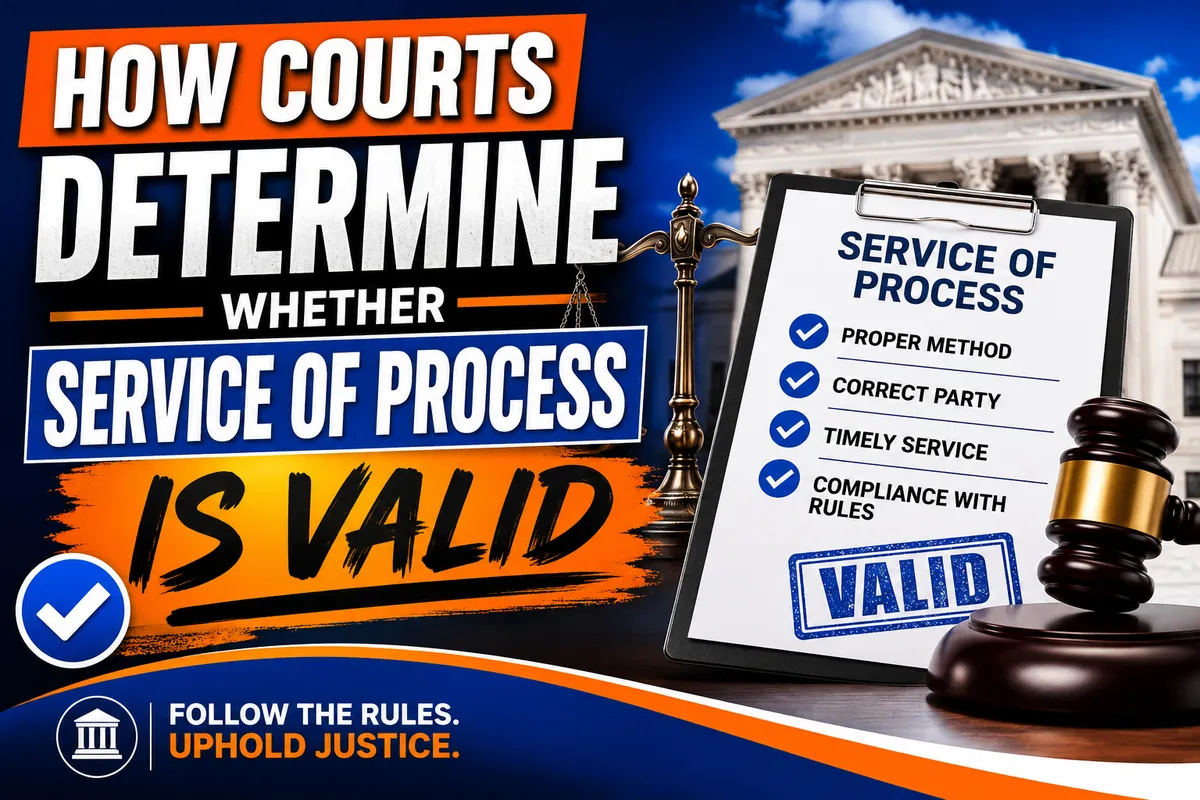
How Courts Determine Whether Service of Process Is Valid | Complete Guide
Learn how courts determine whether service of process is valid, including legal requirements, proof of service, due diligence, and common mistakes that can delay a case.
 process server tips
Ethical Standards Every Professional Process Server Should Follow
Process serving is a critical component of the legal system, ensuring that individuals receive proper notice of legal actions and that due process is protected. Every successful legal proceeding depends on documents being delivered accurately, lawfully, and within required deadlines. This responsibility makes ethical standards for process servers more than just professional expectations. They are essential to maintaining confidence in the justice system.
 process server tips
Due Diligence Requirements for Hard-to-Serve Defendants
Serving legal documents is a critical step in the judicial process. Courts require defendants to receive proper notice of legal actions against them, ensuring fairness and protecting due process rights. However, some individuals are difficult to locate or intentionally avoid service. These hard-to-serve defendants present unique challenges that require process servers to demonstrate thorough due diligence before alternative service methods can be authorized.
 process server tips
The Most Common Skip Tracing Mistakes and How to Avoid Them
Skip tracing is a critical process used by process servers, attorneys, law firms, real estate professionals, debt collectors, and investigators to locate individuals whose contact information is outdated or difficult to find. Whether someone has moved without leaving a forwarding address or is intentionally avoiding service of process, effective skip tracing can mean the difference between success and failure.
Personal Service vs. Substitute Service: What's the Difference?
Proper service of legal documents is one of the most important requirements in any legal proceeding. Courts require parties to receive notice of lawsuits, subpoenas, summonses, complaints, and other legal documents before a case can move forward. Understanding the difference between personal service and substitute service is essential for attorneys, law firms, businesses, and individuals involved in litigation.
 process server tips
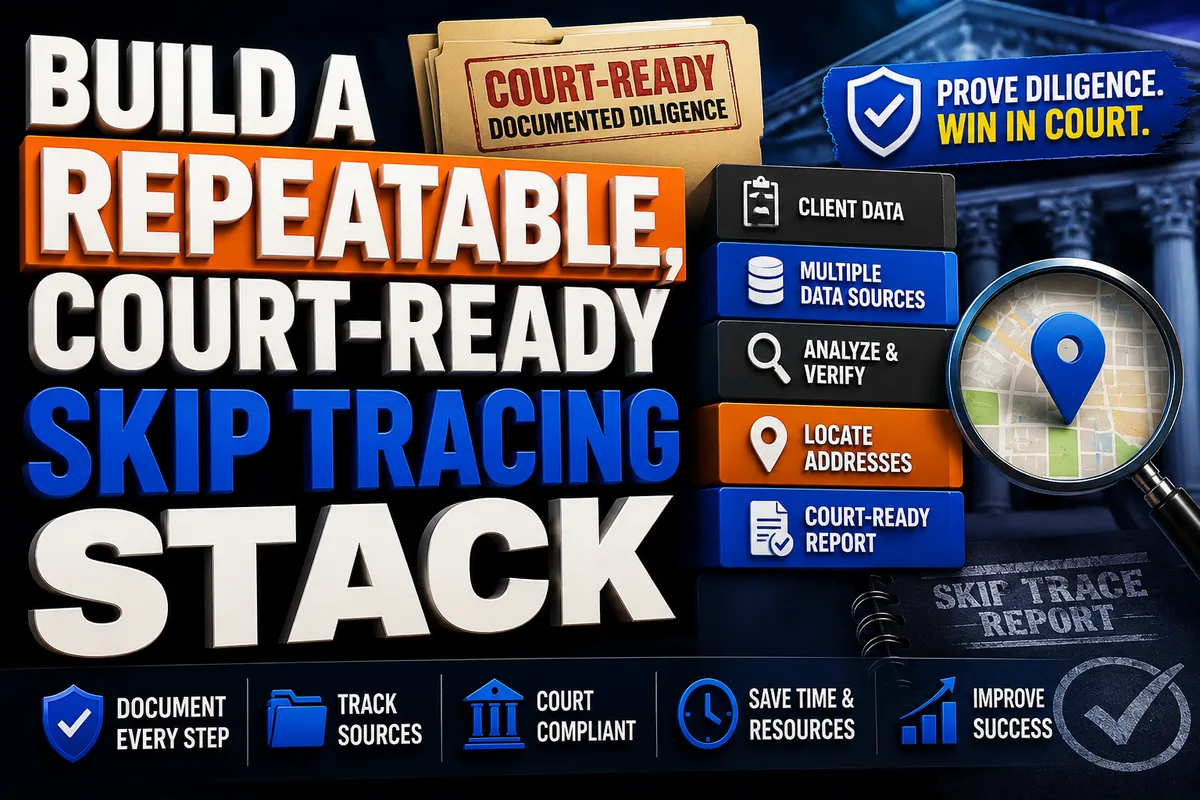
Build a Repeatable, Court-Ready Skip Trace Stack
Skip tracing is becoming more of a process than a database. The modern playbook: stack sources, document each step, and build repeatable searches that stand up in court. Teams that combine OSINT discipline with CRM-style tracking are already outperforming “one-and-done” lookup shops.
 process server tips
Safety Standards in the Age of Viral Service Attempts
Process server safety is trending in two places at once: real-world risk and the “content-ification” of service attempts. A recent viral body-camera style clip centered on impersonation accusations and the legal basics of what constitutes valid service in Utah, reminding operators that professionalism (ID, scripts, de-escalation, and documentation) matters as much as speed. This week’s takeaway: build a written “high-risk address” protocol, standardize check-in/out, and treat cameras as evidence tools, not marketing tools.
 process server tips
The Modern Process Server: Workflow Automation + Local Trust Signals
AI and workflow automation are accelerating across legal operations; process servers that package data cleanly (proof, photos, notes, timestamps, exports) will integrate best with modern client systems. Your growth lever this week: make your Google Business Profile and directory footprint match your operational professionalism.
 process server tips
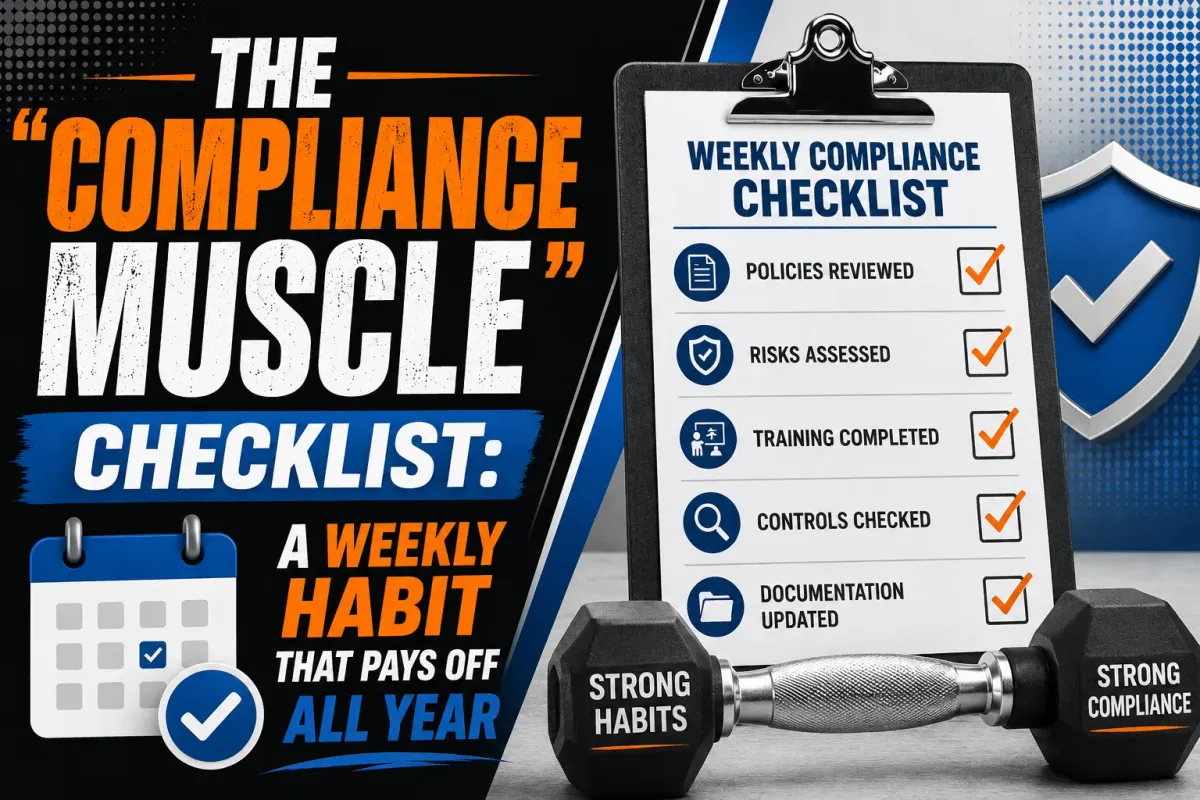
The “Compliance Muscle” Checklist: A Weekly Habit That Pays Off All Year
The Compliance Muscle Checklist is a structured approach that helps legal professionals maintain consistent adherence to process serving regulations, documentation requirements, and internal standards. By incorporating routine reviews into a weekly workflow, process servers can catch issues early, improve record quality, and avoid costly mistakes.
 process server tips
Body Cams, De‑Escalation, and “Pre‑Approach” Planning
We’re revisiting the “safety stack” for process servers—body cams, de-escalation, and pre-approach planning—because the job routinely intersects with high-emotion disputes. This is also a reminder that smart documentation (video + contemporaneous notes) can protect you just as much in court as it does in the field.
 process server tips
Triangulate, Then Verify (A Fast Workflow That Holds Up in Court)
A practical playbook: “triangulate, then verify.” We map an efficient workflow that starts with inexpensive signals (property + utilities + USPS/NCOA equivalents), then escalates to premium tools, then closes with field verification and clean affidavits.
 process server tips
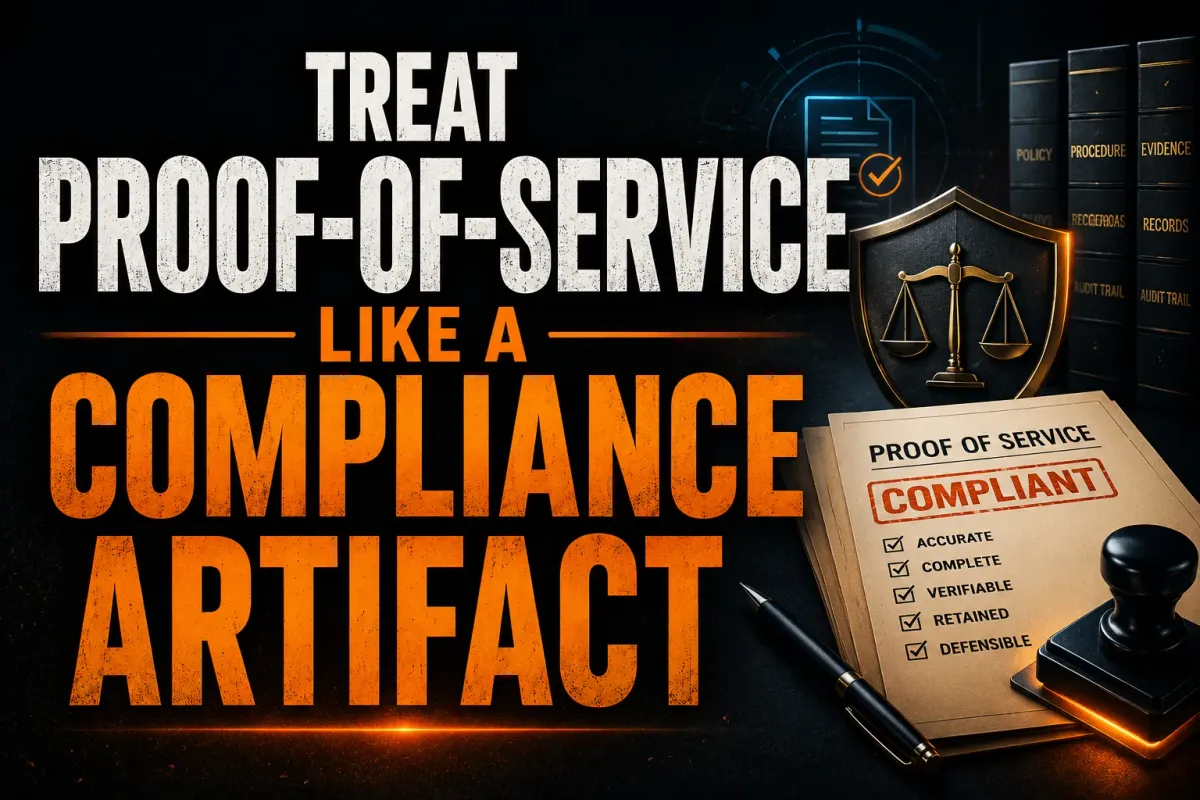
Treat Proof of Service Like a Compliance Artifact
Debt collection litigation keeps colliding with service quality. With Regulation F expectations and heightened state AG activity, collection-facing firms should treat proof-of-service as a compliance artifact—not a formality. We outline operational controls that reduce “sewer service” allegations and protect default judgments.
 process server tips
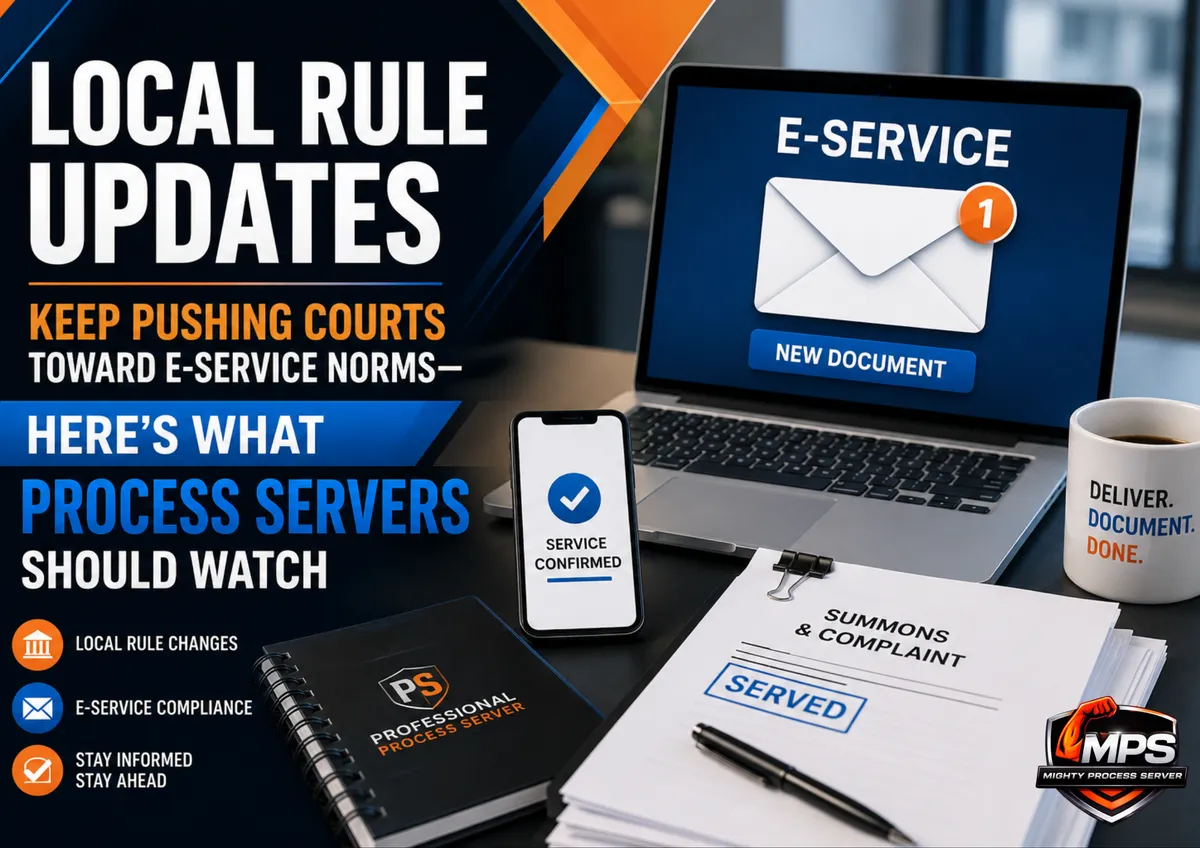
Local Rule Updates Keep Pushing Courts Toward E‑Service Norms—Here’s What Process Servers Should Watch
Courts are becoming increasingly digital, and process servers need to keep pace. From electronic service and filing systems to digital proof-of-service records, evolving court rules are raising expectations for accuracy, documentation, security, and compliance.
 process server tips
Three Tactics to Increase Hit-Rate Without Burning Hours
Skip tracing is getting faster, but also noisier. We share three tactics to improve hit-rate: building a repeatable “triangulation” workflow, documenting confidence levels, and using “freshness signals” to avoid stale contact data.
 process server tips
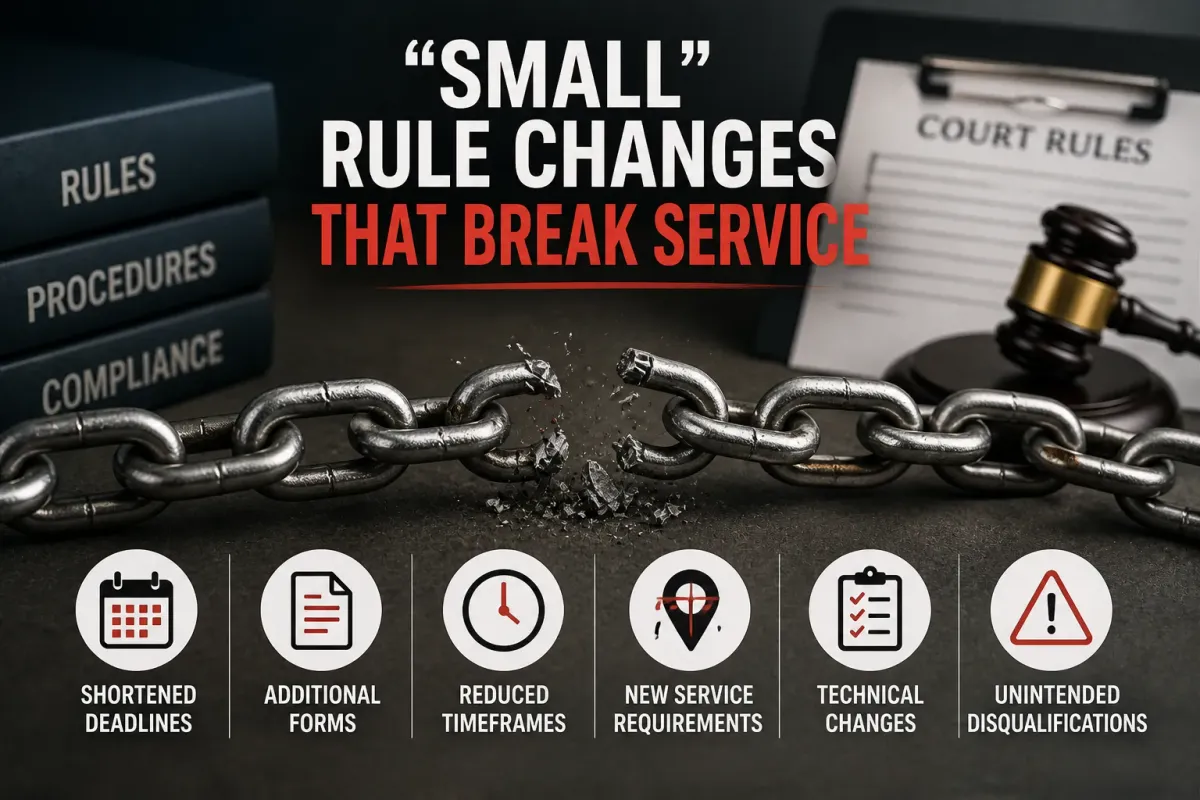
“Small” Rule Changes That Break Service
Service-of-process rules keep shifting at the state level, and “technical” changes can quietly impact your affidavits and success rates. We highlight how recent statutory cleanups and safe-harbor provisions (like Florida’s service-of-process “glitch bill”) can affect substituted service workflows, registered agent hours, and documentation expectations.
 process server tips
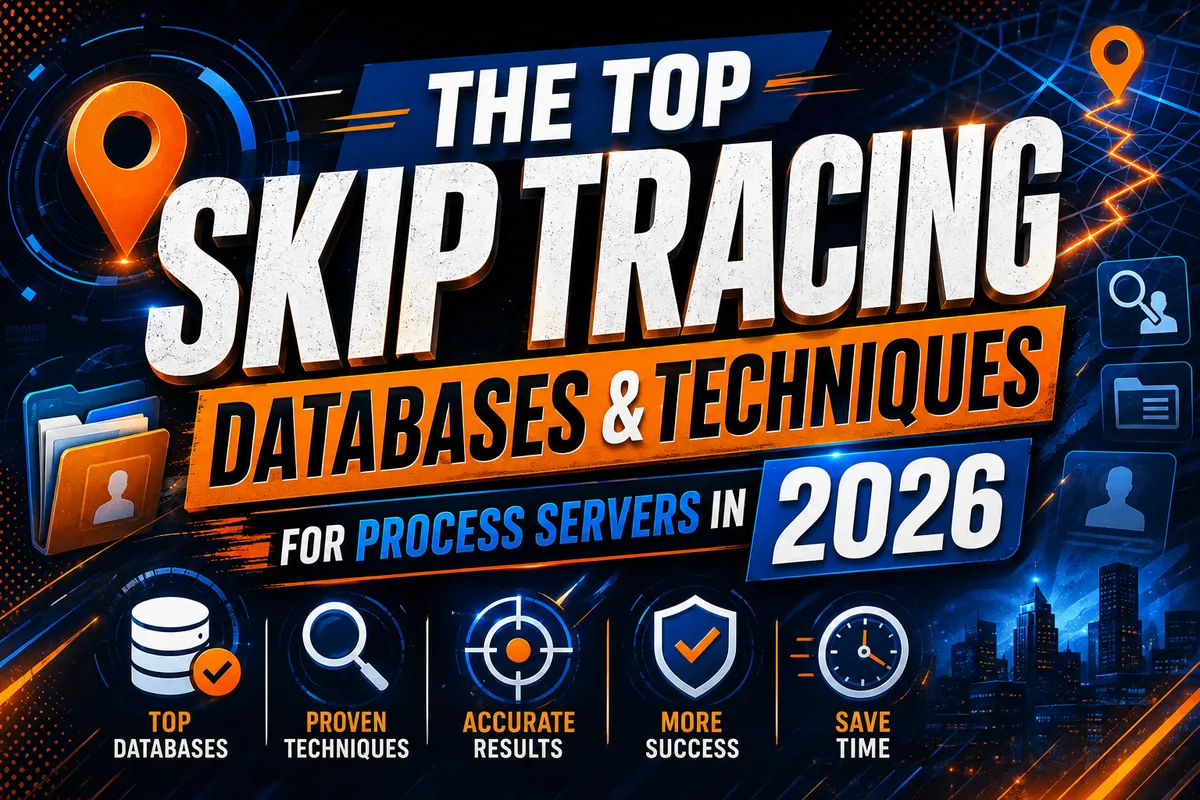
Top 5 Skip Tracing Databases for 2026 — Plus Free Techniques That Actually Work
Discover the top 5 skip tracing databases for 2026, including TLOxp, Tracers, Accurint, IRBsearch, and idiCORE. Compare leading tools and learn free skip tracing techniques process servers and investigators can use to locate hard-to-find individuals more efficiently.
 process server tips
Body Cameras Are No Longer Optional: What a Viral Attack Taught the Profession
A body cam video of a process server being attacked went viral March 11 (@divorcerealtormaryj). The footage was used as court evidence. We cover top cameras for 2026, OSHA's new workplace violence standards, and a safety checklist.
Find a Process Server Today
Connect with verified, experienced process servers across all 50 states through our directory.
Browse Directory