PROCESS SERVER DAILY
Industry guides, state-by-state laws, and best practices for legal professionals.
 business growth
7 Signs It's Time to Start Skip Tracing
One of the biggest challenges in process serving is locating individuals whose whereabouts are unknown. Some people move without updating their address, while others intentionally avoid receiving legal documents. In either situation, repeatedly attempting service at the same location often wastes valuable time and resources. This is where skip tracing for process servers becomes an essential part of the service process.
 process server tips
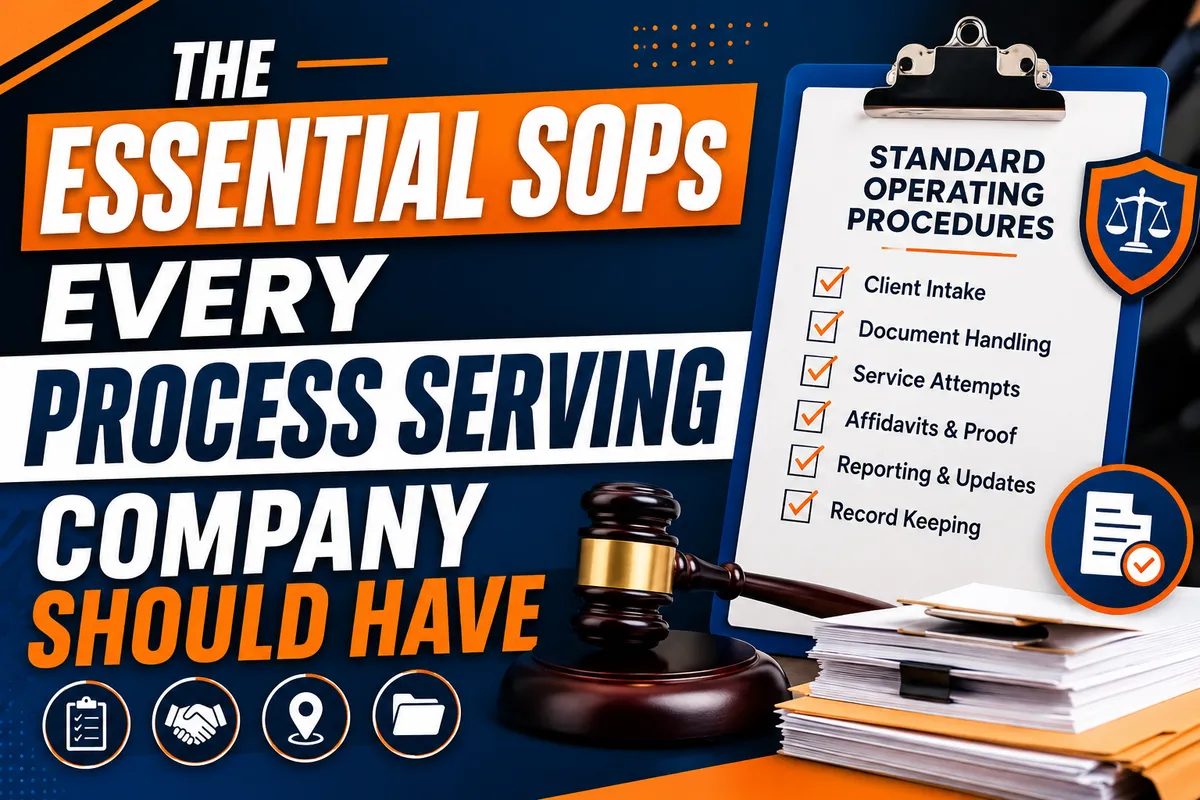
The Essential SOPs Every Process Serving Company Should Have
Standard Operating Procedures, commonly known as SOPs, are written documents that provide detailed instructions for completing recurring tasks. They create a structured framework that helps employees perform their responsibilities accurately, efficiently, and consistently. In the legal services industry, where deadlines, documentation, and compliance are critical, SOPs help ensure every assignment is handled according to established process server standard procedures.
All Articles
 process server tips
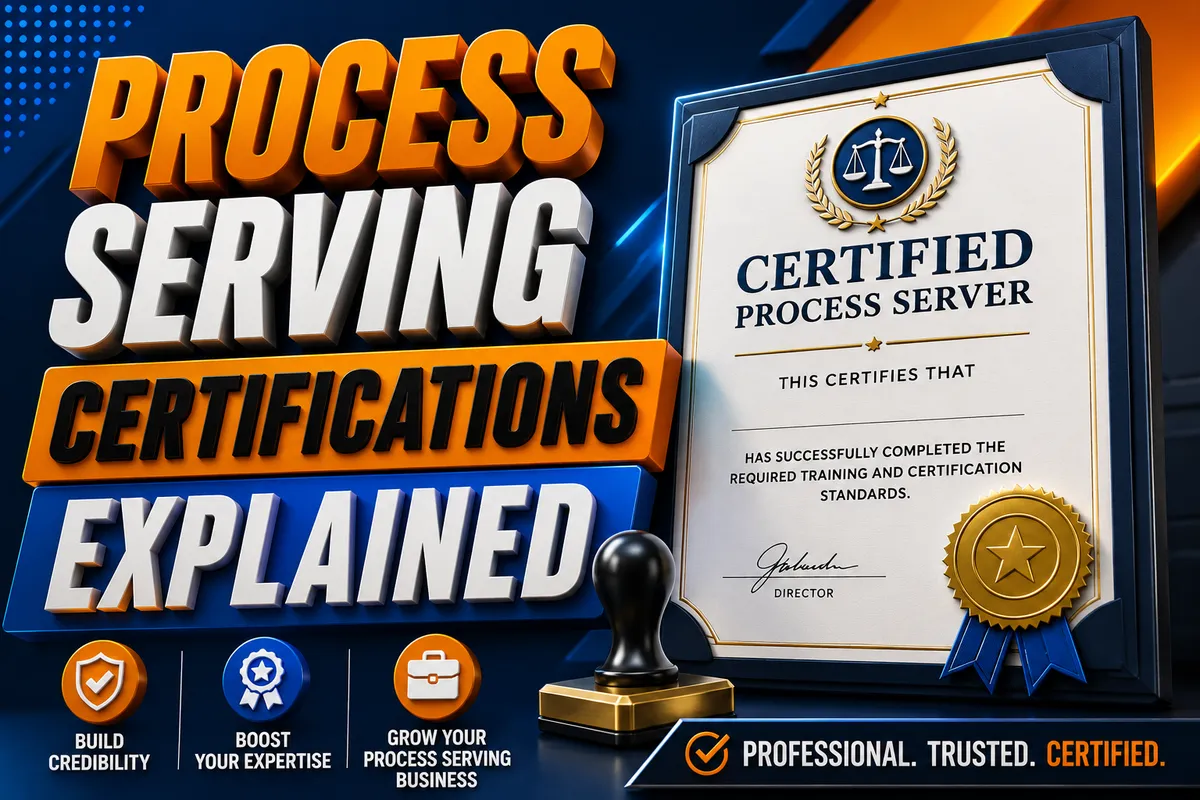
Process Serving Certifications Explained
The legal system depends on proper notification to ensure every party has an opportunity to respond to legal actions. This responsibility falls on process servers, who deliver legal documents such as summonses, complaints, subpoenas, writs, and other court papers according to applicable laws. Because proper service can directly affect the validity of a legal case, professionalism and legal knowledge are essential. As the legal field continues to evolve, the role of the process server has become increasingly important. Courts expect service to be completed accurately, documented thoroughly, and performed within the rules established by each jurisdiction. This is where process serving certification becomes valuable.
 process server tips
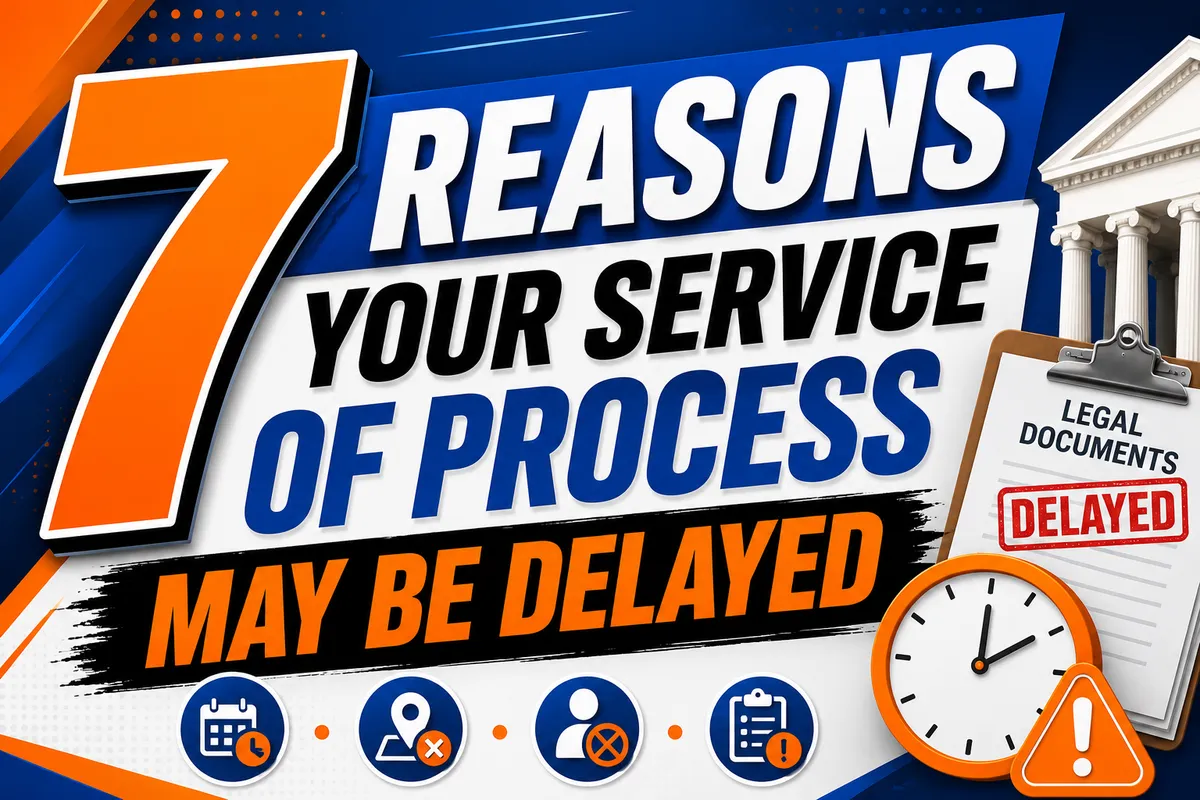
7 Reasons Your Service of Process May Be Delayed
Service of process is one of the most important steps in the legal system. Before a court case can move forward, the defendant must receive proper legal notice according to the applicable laws. When this step is delayed, court schedules may be affected, legal deadlines may be extended, and clients may experience unnecessary frustration.
 process server tips
Mistakes New Process Servers Make (And How to Avoid Them)
Process serving is a critical component of the legal system because it ensures individuals receive proper notice of legal proceedings. Courts rely on valid service of process to protect due process rights and move cases forward. New process servers often encounter obstacles that affect their success. Some mistakes are operational, while others involve legal compliance or personal safety. Understanding these challenges is one of the most important steps toward becoming a successful process server.
 process server tips
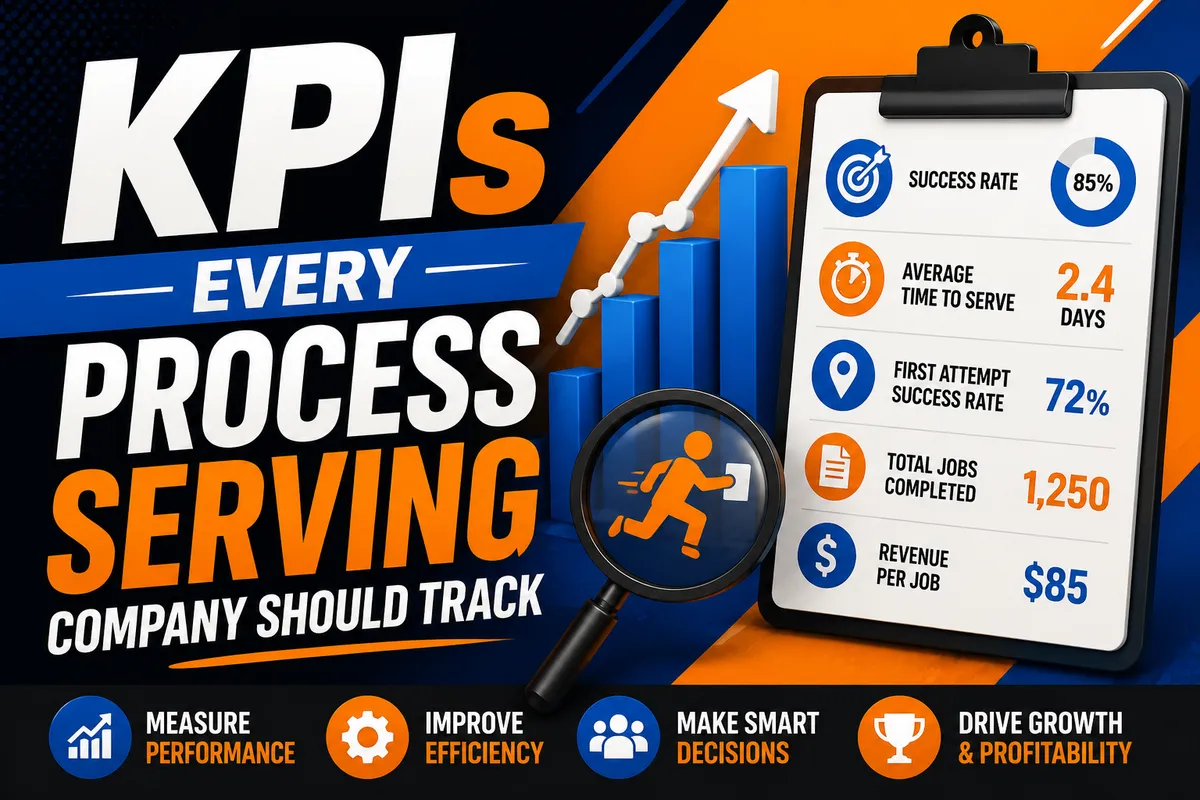
KPIs Every Process Serving Company Should Track
Success in the process serving industry depends on more than simply delivering legal documents. Every successful company needs to understand how efficiently it operates, how satisfied its clients are, and where improvements can be made. This is where process serving KPIs, or Key Performance Indicators, become essential.
 process server tips
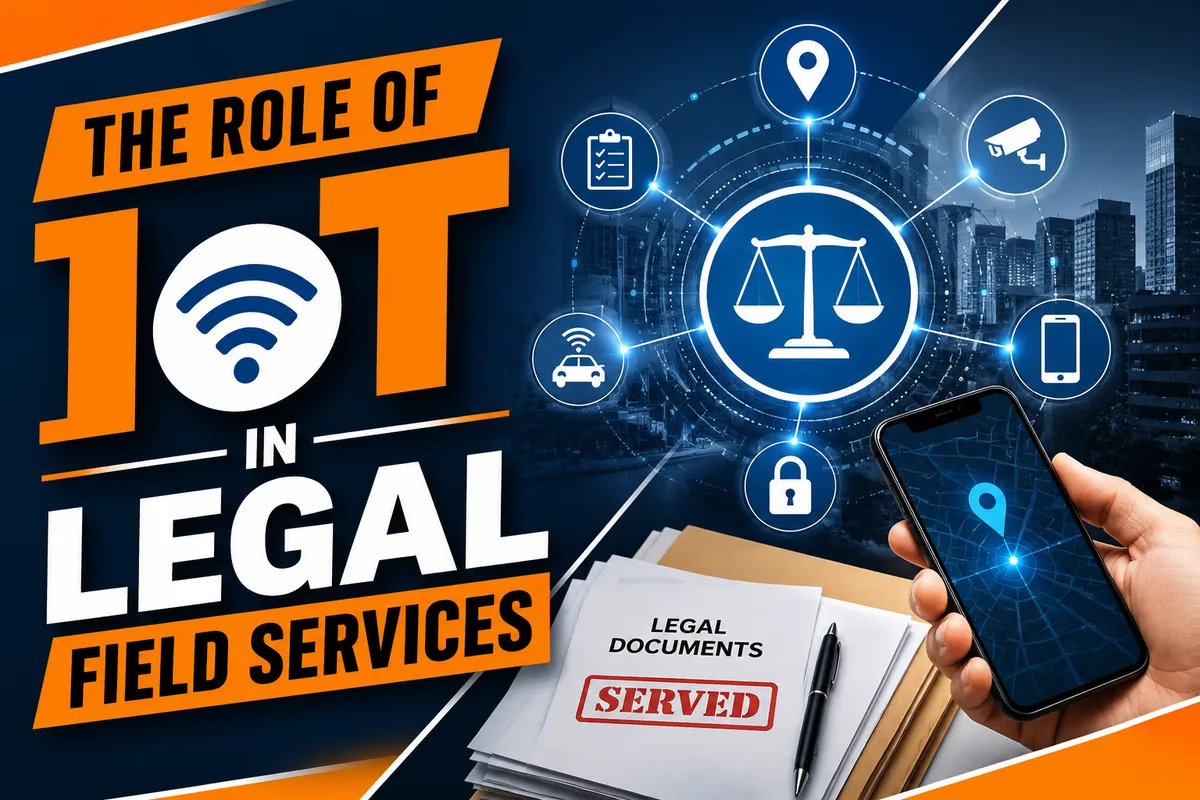
The Role of IoT in Legal Field Services
The Internet of Things (IoT) is transforming industries around the world, and the legal profession is beginning to experience its benefits. As technology evolves, IoT in legal services is becoming an important part of how legal professionals manage cases, communicate with clients, and complete field operations more efficiently. For process servers, investigators, court filing specialists, and law firms, IoT provides a smarter way to connect people, devices, and information. Internet-connected devices can automatically collect, transmit, and organize data, reducing manual work while improving documentation and transparency.
 business growth
The SEO Strategy Every Process Server Should Follow
Most people searching for a process server today begin with Google. Attorneys, law firms, landlords, collection agencies, businesses, and private individuals often search online using phrases like "find a process server," "process server near me," or "same day process server." If your business does not appear on the first page of search results, potential clients will likely contact one of your competitors instead. That is why having a strong SEO strategy for process servers is one of the most important investments you can make in your business. Search Engine Optimization, commonly known as SEO, helps your website rank higher in search results, increases your online visibility, and attracts qualified clients who are actively looking for process serving services.
 process server tips
How Heat Maps Can Improve Process Serving Routes
Heat maps provide a visual representation of service activity, allowing process servers to quickly identify areas with high concentrations of assignments, recognize service patterns, and make smarter routing decisions. Instead of relying solely on GPS navigation or manually planning routes, agencies can use data to improve scheduling, reduce travel time, and maximize productivity.
 industry insights
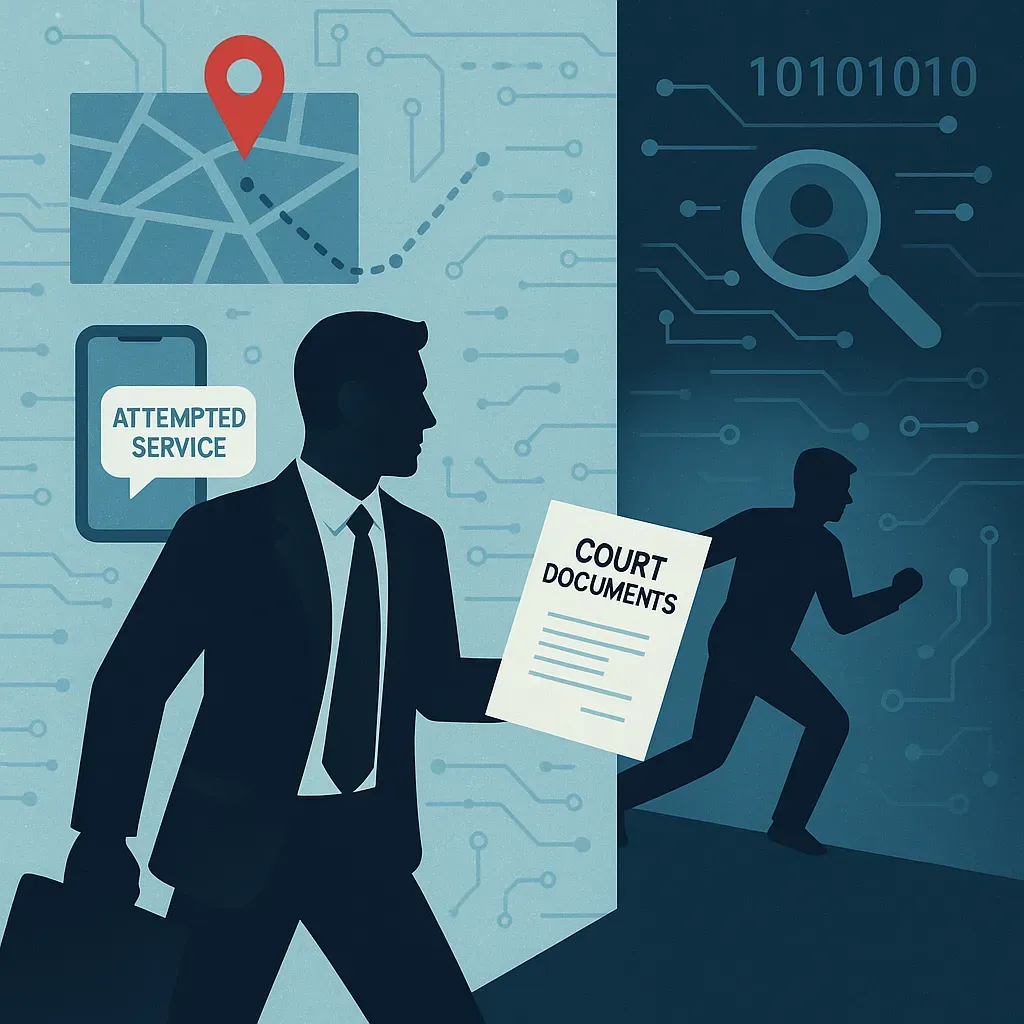
The 2026 Guide to Serving Evasive Defendants: New Tactics, Tools & Legal Considerations
Evasive defendants are tougher to serve than ever, but modern tools give process servers a clear edge. Success in 2026 comes from combining digital intelligence (social media clues, online activity, multi-database skip tracing) with strategic timing, legally sound surveillance, and strong documentation.
 process server tips
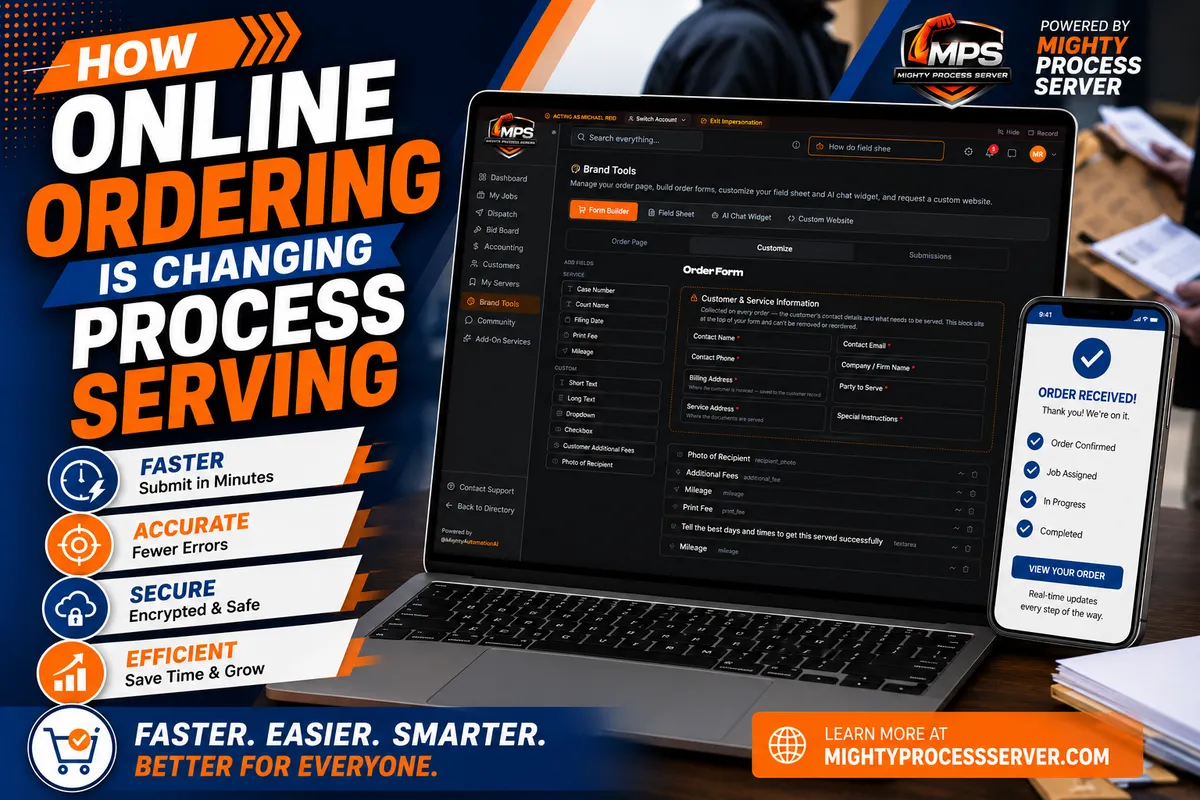
How Online Ordering Is Changing Process Serving
The legal industry continues to embrace digital transformation, and process serving is evolving alongside it. Traditional methods that relied on phone calls, emails, paper forms, and manual data entry are rapidly being replaced by modern digital solutions. One of the most significant advancements is the adoption of online ordering for process serving, which allows clients to submit service requests securely through web-based platforms at any time.
 process server tips
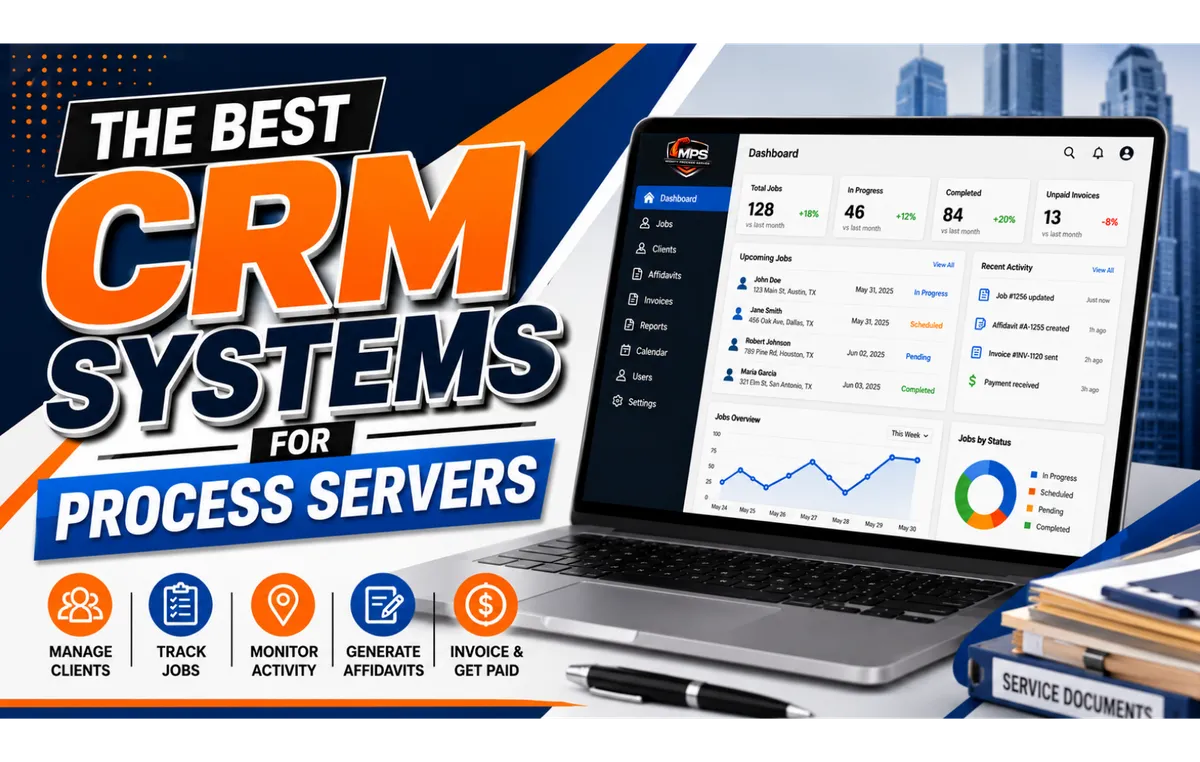
The Best CRM Systems for Process Servers
Success in the process serving industry requires much more than delivering legal documents. Process servers must manage client relationships, organize service requests, coordinate schedules, maintain accurate records, communicate with attorneys and law firms, generate affidavits, track invoices, and monitor business performance. As a business grows, handling these responsibilities with spreadsheets, emails, or paper files becomes increasingly difficult.
 industry insights
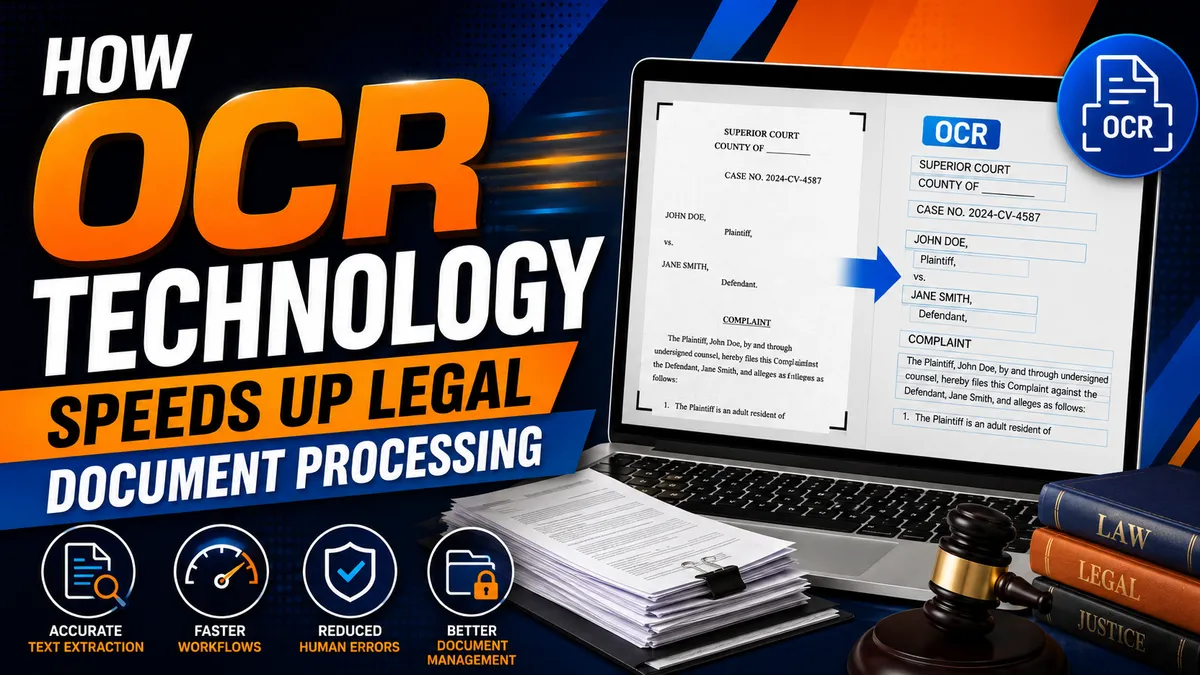
How OCR Technology Speeds Up Legal Document Processing
Optical Character Recognition (OCR) converts scanned documents, images, and PDF files into editable and searchable digital text. Rather than treating a scanned page as a simple image, OCR identifies letters, numbers, and formatting so software can recognize, search, copy, organize, and extract information automatically.
 industry insights
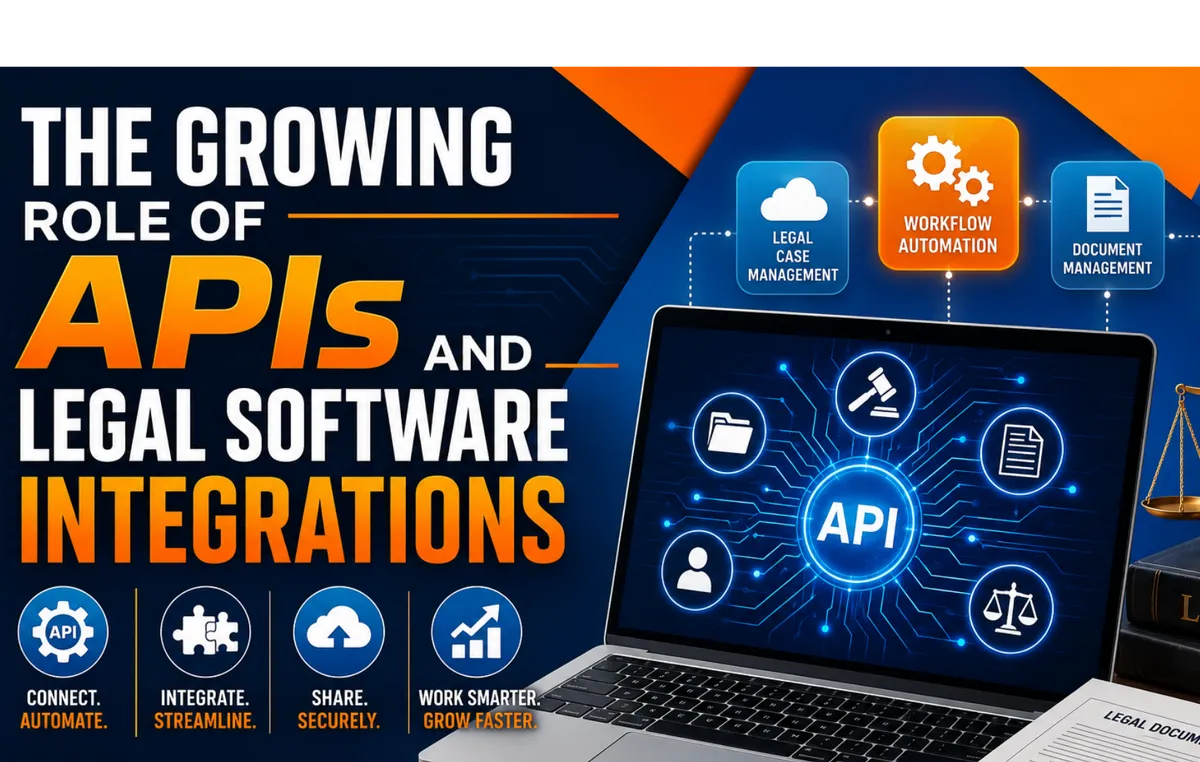
The Growing Role of APIs and Legal Software Integrations
Technology is transforming every aspect of the legal profession. Law firms, legal departments, legal support companies, and process servers are increasingly adopting digital tools to improve efficiency, reduce manual work, and deliver better client service. One of the most significant developments driving this digital transformation is the use of Application Programming Interfaces, commonly known as APIs.
 industry insights
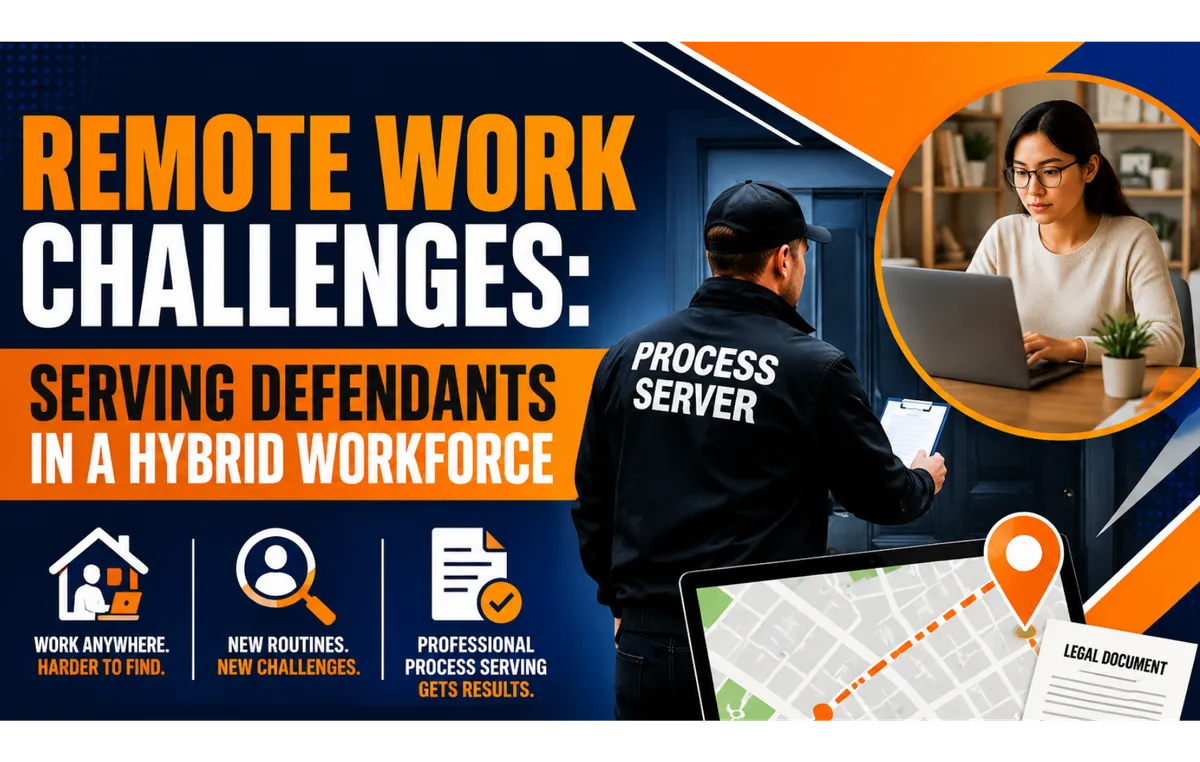
Remote Work Challenges: Serving Defendants in a Hybrid Workforce
The workplace has changed dramatically over the past several years. Businesses across nearly every industry have embraced remote and hybrid work models, allowing employees to divide their time between home and the office or work entirely from remote locations. While these flexible work arrangements have improved productivity and employee satisfaction, they have also introduced new remote work challenges in process serving.
 industry insights
ESG and Sustainability: Going Paperless in Legal Support
Environmental, Social, and Governance (ESG) principles are becoming an important part of modern business strategy across every industry, including the legal profession. ESG in legal support focuses on adopting environmentally responsible practices, ethical governance, operational transparency, and sustainable business processes that improve both organizational performance and client trust.
 industry insights
Cross-Border Service of Process: Navigating International Legal Requirements
As business, litigation, and personal legal matters increasingly extend across national borders, cross-border service of process has become an important part of modern legal practice. Attorneys, law firms, corporations, and licensed process servers may need to serve legal documents abroad when a party is located outside the country where a case is filed.
 process server tips
How Process Servers Help Property Managers Stay Compliant
Property management involves much more than collecting rent and maintaining buildings. Property managers are responsible for complying with numerous legal requirements that protect both property owners and tenants. From lease enforcement to eviction proceedings, every legal action must follow applicable laws and established procedures.
 process server tips
How Open-Source Intelligence (OSINT) Supports Skip Tracing
In today's digital age, intelligence gathering has expanded far beyond traditional methods. Open-source intelligence, commonly known as OSINT, refers to the collection and analysis of publicly available information to support investigations, verification, and decision-making.
 process server tips
Why Cybersecurity Matters in Process Serving
Cybersecurity in process serving involves protecting electronic data, legal documents, client communications, and business systems from unauthorized access, theft, and cyberattacks. Attorneys, law firms, corporations, and private clients trust process servers with confidential information that must remain secure throughout every stage of the service process.
 process server tips
What Every Litigation Paralegal Should Know About Process Serving
A strong litigation paralegal guide includes more than document preparation and case organization. It also requires a solid understanding of process serving basics, legal requirements, communication with process servers, and proper documentation. Working with experienced professionals helps attorneys move cases forward efficiently while protecting the rights of all parties involved.
 process server tips
What Law Firms Expect From Modern Process Servers
In today’s fast-moving legal environment, law firms expect more from process servers than basic document delivery. Modern process servers are now essential partners in litigation support, helping attorneys meet deadlines, maintain compliance, and keep cases moving forward with accuracy and professionalism.
 news updates
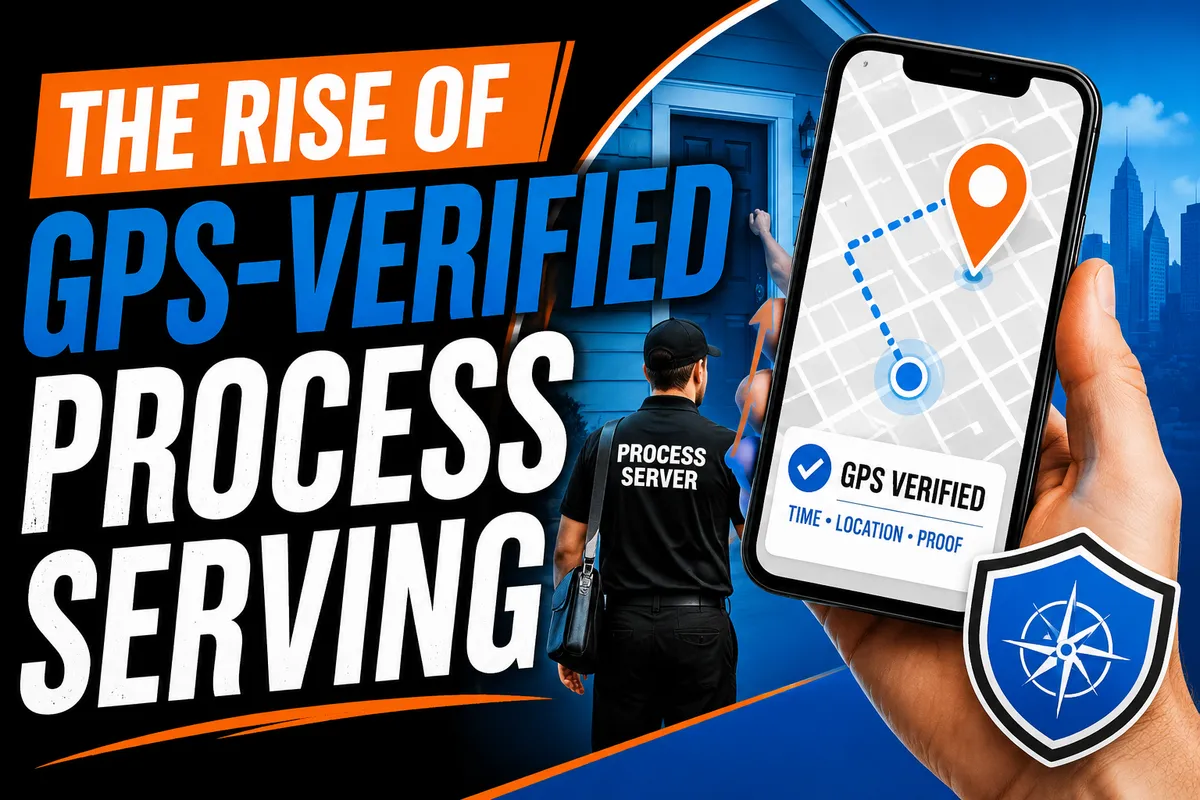
The Rise of GPS-Verified Process Serving: How Technology Is Transforming Legal Document Delivery
In today's legal landscape, speed, accuracy, and accountability have become essential for successful case management. As technology continues to reshape the legal profession, one innovation is changing how legal documents are delivered and verified: GPS-verified process serving.
 process server tips
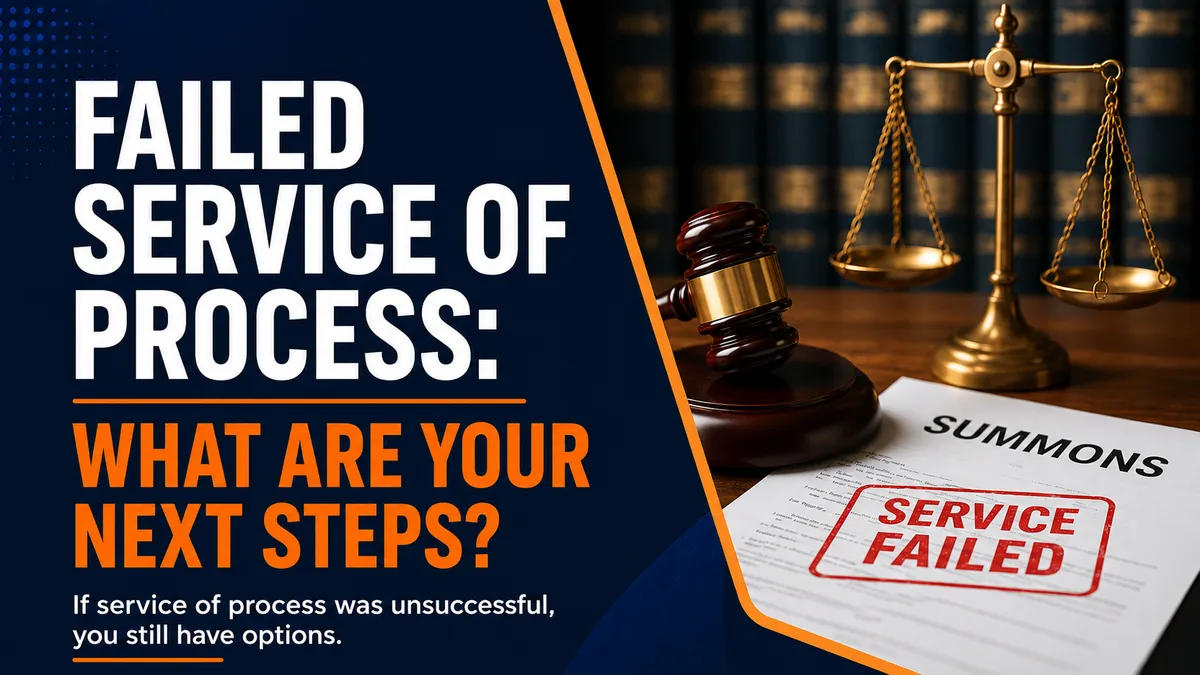
Failed Service of Process: Understanding Your Next Steps
A failed service of process can create delays, increase legal costs, and complicate court proceedings. Whether you are an attorney, law firm, business, or private individual, understanding why service of process failure occurs and knowing the next steps after failed service can help keep your case moving forward.
 legal guide
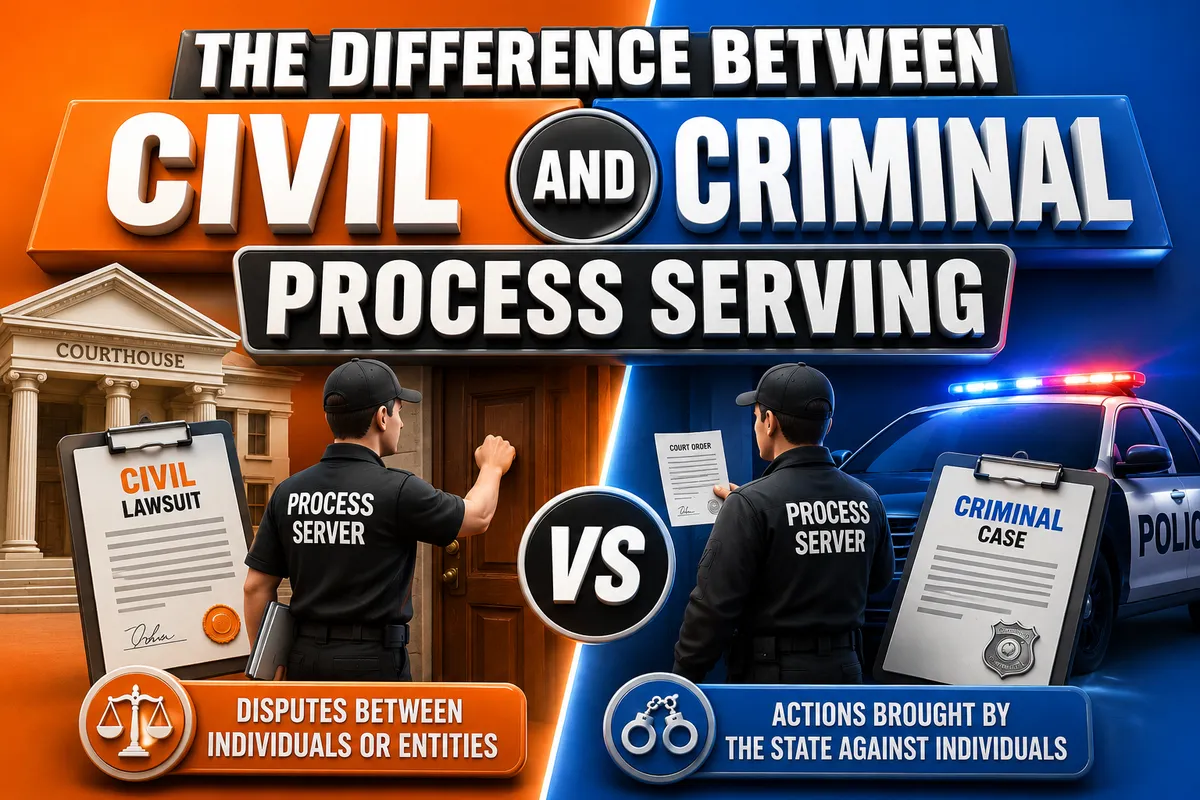
The Difference Between Civil and Criminal Process Serving
Process serving is a fundamental part of the legal system that ensures individuals and organizations receive proper notice of legal actions involving them. This procedure protects the constitutional right to due process by giving all parties an opportunity to prepare for court proceedings and respond appropriately. Without proper service of process, a legal case may be delayed, challenged, or even dismissed.
 process server tips
How Courts Determine Whether Service of Process Is Valid | Complete Guide
Learn how courts determine whether service of process is valid, including legal requirements, proof of service, due diligence, and common mistakes that can delay a case.
 process server tips
Ethical Standards Every Professional Process Server Should Follow
Process serving is a critical component of the legal system, ensuring that individuals receive proper notice of legal actions and that due process is protected. Every successful legal proceeding depends on documents being delivered accurately, lawfully, and within required deadlines. This responsibility makes ethical standards for process servers more than just professional expectations. They are essential to maintaining confidence in the justice system.
 industry insights
The Difference Between Skip Tracing and Private Investigation
In the legal and investigative industries, the terms skip tracing and private investigation are often mentioned together. While both services involve gathering information and locating individuals, they serve different purposes and require distinct methods, tools, and expertise. Understanding the difference between skip tracing and private investigation helps attorneys, law firms, process servers, debt recovery professionals, and businesses choose the right solution for their specific needs.
 process server tips
Due Diligence Requirements for Hard-to-Serve Defendants
Serving legal documents is a critical step in the judicial process. Courts require defendants to receive proper notice of legal actions against them, ensuring fairness and protecting due process rights. However, some individuals are difficult to locate or intentionally avoid service. These hard-to-serve defendants present unique challenges that require process servers to demonstrate thorough due diligence before alternative service methods can be authorized.
 process server tips
The Most Common Skip Tracing Mistakes and How to Avoid Them
Skip tracing is a critical process used by process servers, attorneys, law firms, real estate professionals, debt collectors, and investigators to locate individuals whose contact information is outdated or difficult to find. Whether someone has moved without leaving a forwarding address or is intentionally avoiding service of process, effective skip tracing can mean the difference between success and failure.
Personal Service vs. Substitute Service: What's the Difference?
Proper service of legal documents is one of the most important requirements in any legal proceeding. Courts require parties to receive notice of lawsuits, subpoenas, summonses, complaints, and other legal documents before a case can move forward. Understanding the difference between personal service and substitute service is essential for attorneys, law firms, businesses, and individuals involved in litigation.
 process server tips
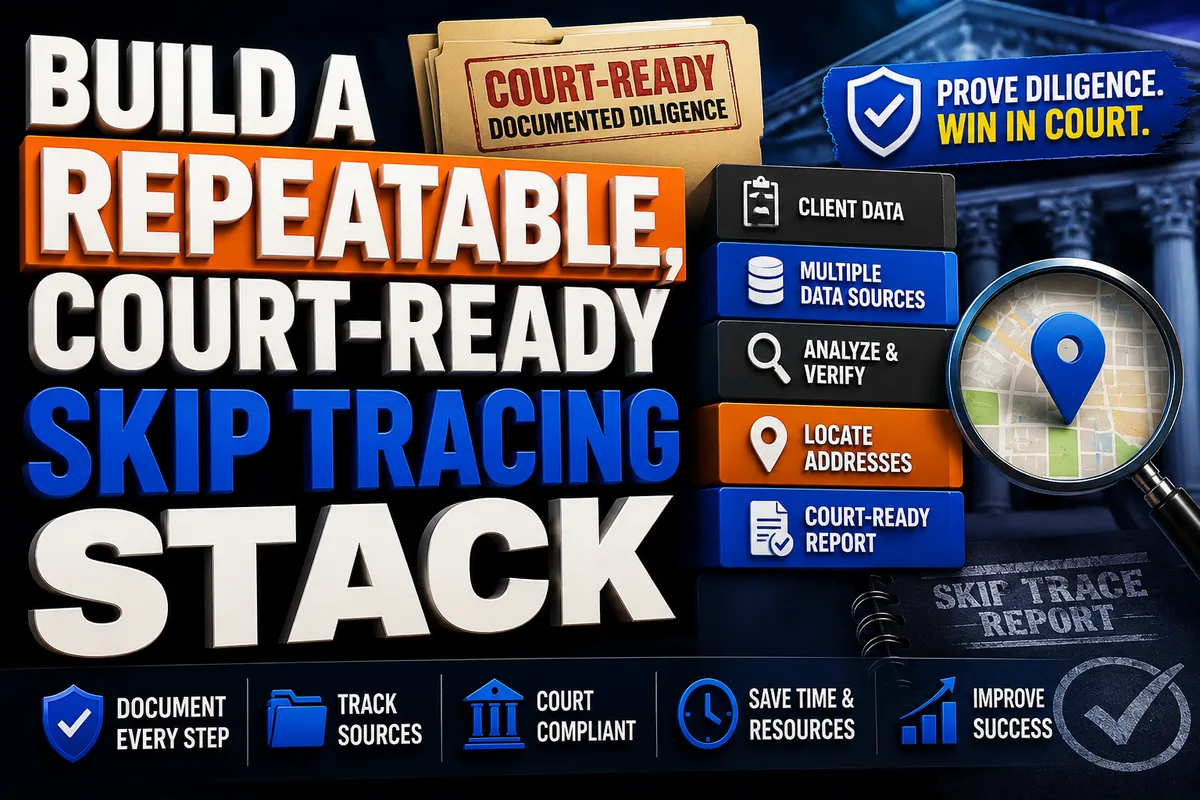
Build a Repeatable, Court-Ready Skip Trace Stack
Skip tracing is becoming more of a process than a database. The modern playbook: stack sources, document each step, and build repeatable searches that stand up in court. Teams that combine OSINT discipline with CRM-style tracking are already outperforming “one-and-done” lookup shops.
 industry insights
Defensibility-First Service for Debt Collection Work
Debt collection and default-judgment workflows continue to face heightened scrutiny around notice, records, and consumer harm. The winning posture for process-serving vendors working with collections is to run “defensibility-first” service: clean affidavits, strong diligence logs, and client education on when alternative service is appropriate. The best operators are packaging evidence the way regulators and courts want to see it.
 news updates
Connecticut Opens the Door to Email Service of Process (Insurance Dept.)
Connecticut’s insurance modernization package includes a meaningful shift: the Insurance Department can now email regulated entities “for service of process,” with a presumption of receipt within a week. This is a compliance landmine (in a good way if you’re prepared): if your email of record is stale, you can miss a clock you didn’t know started. The industry should treat “email of record” like a registered agent address—monitored, redundant, and auditable.
 process server tips
Safety Standards in the Age of Viral Service Attempts
Process server safety is trending in two places at once: real-world risk and the “content-ification” of service attempts. A recent viral body-camera style clip centered on impersonation accusations and the legal basics of what constitutes valid service in Utah, reminding operators that professionalism (ID, scripts, de-escalation, and documentation) matters as much as speed. This week’s takeaway: build a written “high-risk address” protocol, standardize check-in/out, and treat cameras as evidence tools, not marketing tools.
 process server tips
The Modern Process Server: Workflow Automation + Local Trust Signals
AI and workflow automation are accelerating across legal operations; process servers that package data cleanly (proof, photos, notes, timestamps, exports) will integrate best with modern client systems. Your growth lever this week: make your Google Business Profile and directory footprint match your operational professionalism.
 industry insights
Surveillance Hygiene: Staying Effective While Respecting Privacy and Licensing Boundaries
We’re spotlighting “legal, ethical surveillance hygiene”—how to stay effective while respecting privacy, consent, and licensing boundaries. The business opportunity: position your PI practice as the “clean hands” option for law firms and insurers.
 process server tips
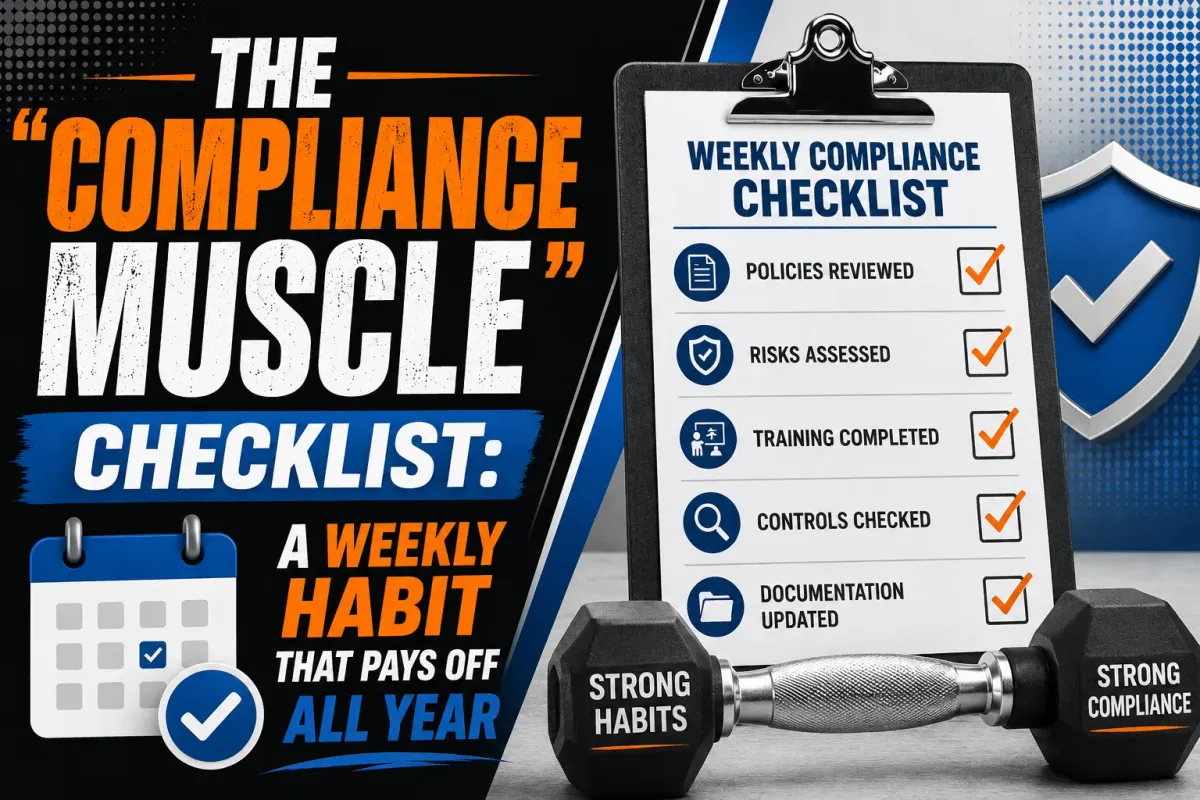
The “Compliance Muscle” Checklist: A Weekly Habit That Pays Off All Year
The Compliance Muscle Checklist is a structured approach that helps legal professionals maintain consistent adherence to process serving regulations, documentation requirements, and internal standards. By incorporating routine reviews into a weekly workflow, process servers can catch issues early, improve record quality, and avoid costly mistakes.
 news updates
Collections Risk: Why “Service Integrity” Is Still the First Domino
Collection Agency Watch: CFPB messaging signals shifting enforcement focus and selective non-prioritization in certain areas, which can change how agencies think about compliance budgets. On the operational side, “sewer service” remains a reputational landmine—collection stakeholders should treat service integrity as a first-line risk control.
 news updates
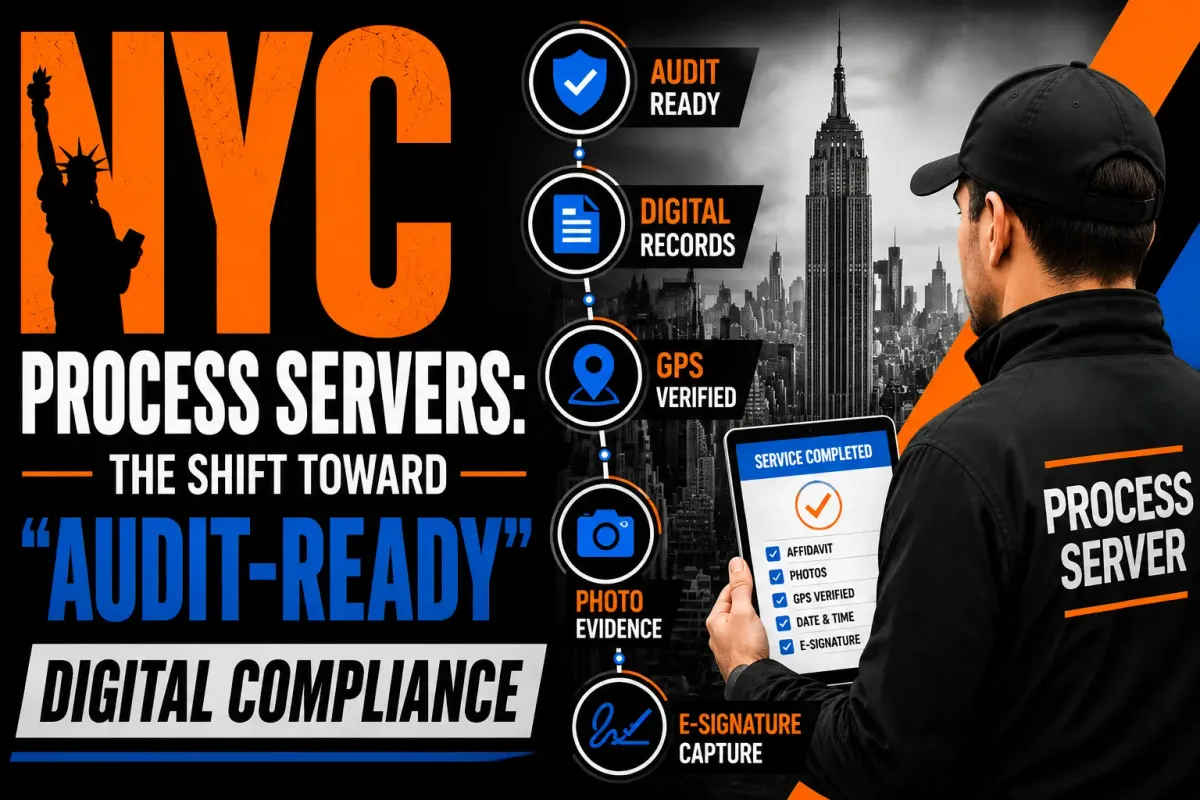
NYC Process Servers: The Shift Toward “Audit‑Ready” Digital Compliance
NYC process servers should prepare for a more technical compliance era: third-party GPS/data “vault” requirements, tighter time-lock standards, longer retention, and exportable logs. Even if you don’t work NYC, expect other jurisdictions to borrow the “tamper-proof record” playbook.
 process server tips
Body Cams, De‑Escalation, and “Pre‑Approach” Planning
We’re revisiting the “safety stack” for process servers—body cams, de-escalation, and pre-approach planning—because the job routinely intersects with high-emotion disputes. This is also a reminder that smart documentation (video + contemporaneous notes) can protect you just as much in court as it does in the field.
 business growth
Small Business Growth: A Simple Weekly Marketing Routine That Compounds
Your marketing moat is local trust plus operational responsiveness. We pull a simple weekly routine for Google Business Profile health (photos, hours, services, review replies) and connect it to conversion—then plug MightyWebsites.com as the “fast lane” for service businesses.
 industry insights
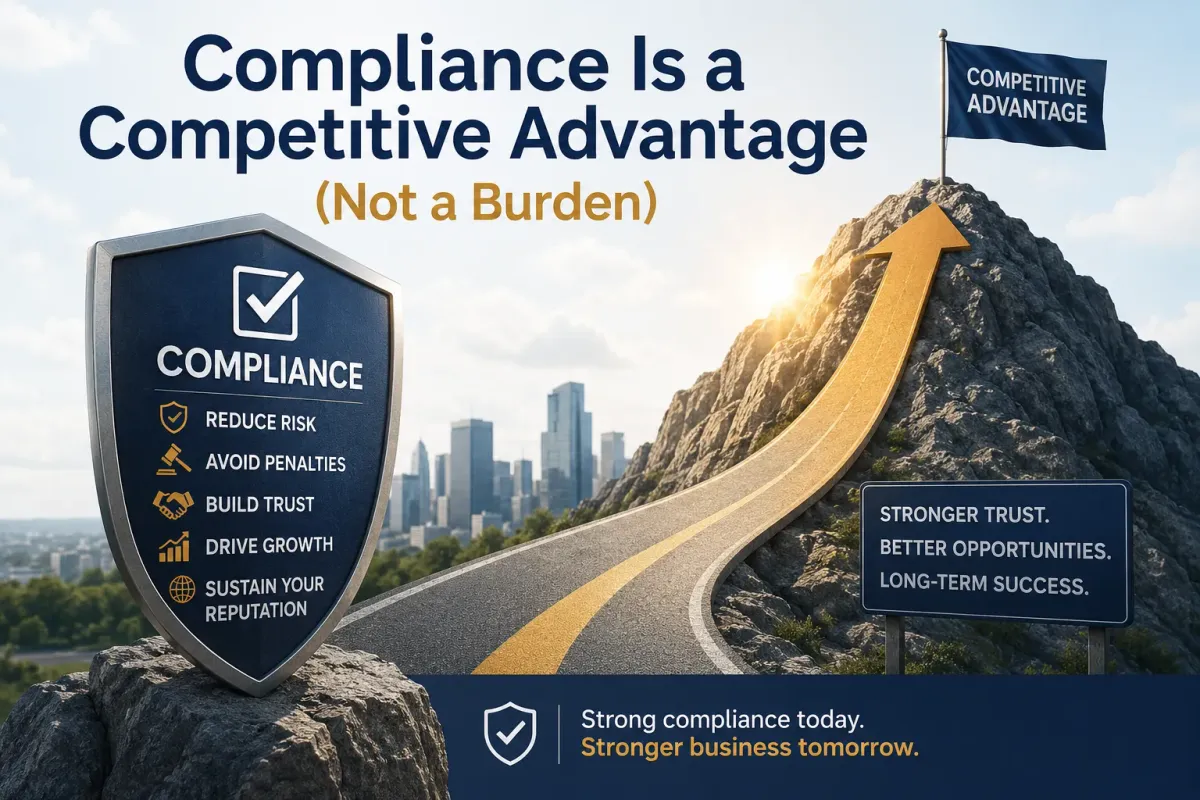
Compliance Is a Competitive Advantage (Not a Burden)
Licensing boards and compliance discussions continue to emphasize documentation, training, and boundaries—especially as surveillance tools get more capable. We summarize what to watch in board meetings and why PIs should keep internal policies updated.
 process server tips
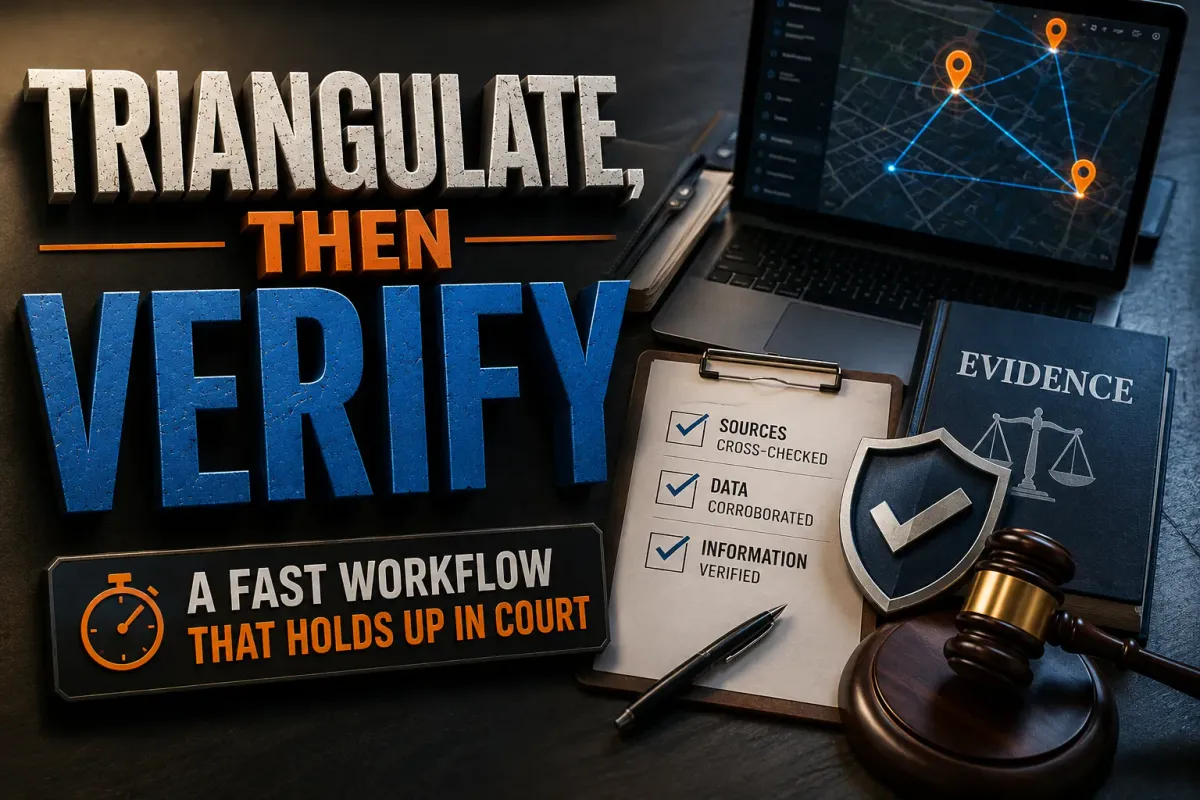
Triangulate, Then Verify (A Fast Workflow That Holds Up in Court)
A practical playbook: “triangulate, then verify.” We map an efficient workflow that starts with inexpensive signals (property + utilities + USPS/NCOA equivalents), then escalates to premium tools, then closes with field verification and clean affidavits.
 state laws
The Data-Broker Squeeze Is Coming—Prepare Your Skip Tracing Stack Now
Data access is changing under privacy law. California’s Delete Act (DROP) is rolling toward August 2026 obligations—meaning data brokers will face tighter rules for deletion workflows and registration. For skip tracers and investigators, the takeaway is to diversify sources and tighten permissible-purpose documentation.
 process server tips
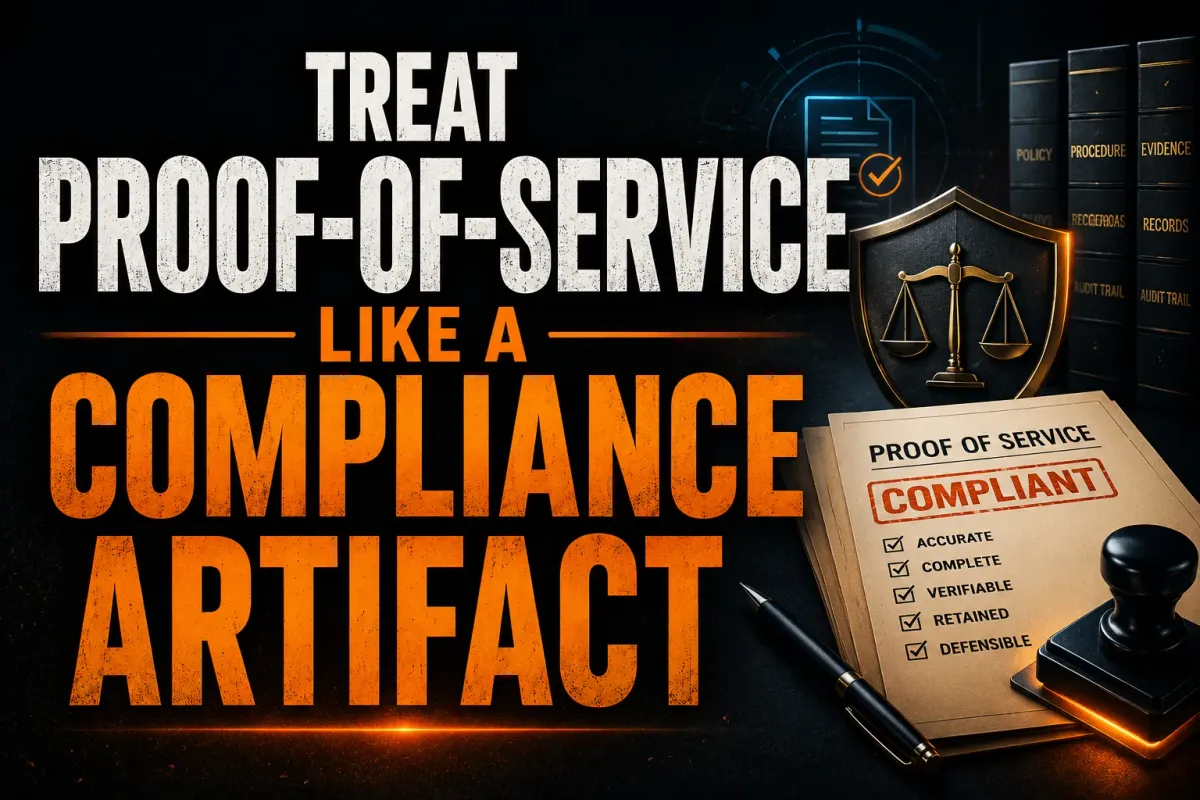
Treat Proof of Service Like a Compliance Artifact
Debt collection litigation keeps colliding with service quality. With Regulation F expectations and heightened state AG activity, collection-facing firms should treat proof-of-service as a compliance artifact—not a formality. We outline operational controls that reduce “sewer service” allegations and protect default judgments.
 business growth
Google Business Profile Still Drives Calls—If You Post Weekly, List Services, and Turn Messaging On
Local growth conversations keep highlighting Google Business Profile as a revenue lever—weekly posts, service lists, messaging, and review generation. For process servers, that’s a direct path to more attorney referrals and direct-to-consumer work, especially when paired with a strong website from MightyWebsites.com.
 industry insights
Surveillance Reporting That Holds Up: What PIs (and Dual-Licensed Process Servers) Should Standardize Now
Strong surveillance reporting can make the difference between useful fieldwork and documentation that falls apart under scrutiny. Learn what private investigators and dual-licensed process servers should standardize now—from time-stamped activity logs and neutral language to media organization, chain of custody, and quality control.
 technology
Dashboard-First Operations: Why “Proof Quality + Cycle Time” Is the New Sales Pitch for Process Servers
Legal ops and litigation teams are increasingly adopting dashboard-first decision-making. For process servers, this is a signal to speak the language of metrics: cycle time, attempt cadence, proof quality, and exception handling—especially if you want to win and retain enterprise work.
 process server tips
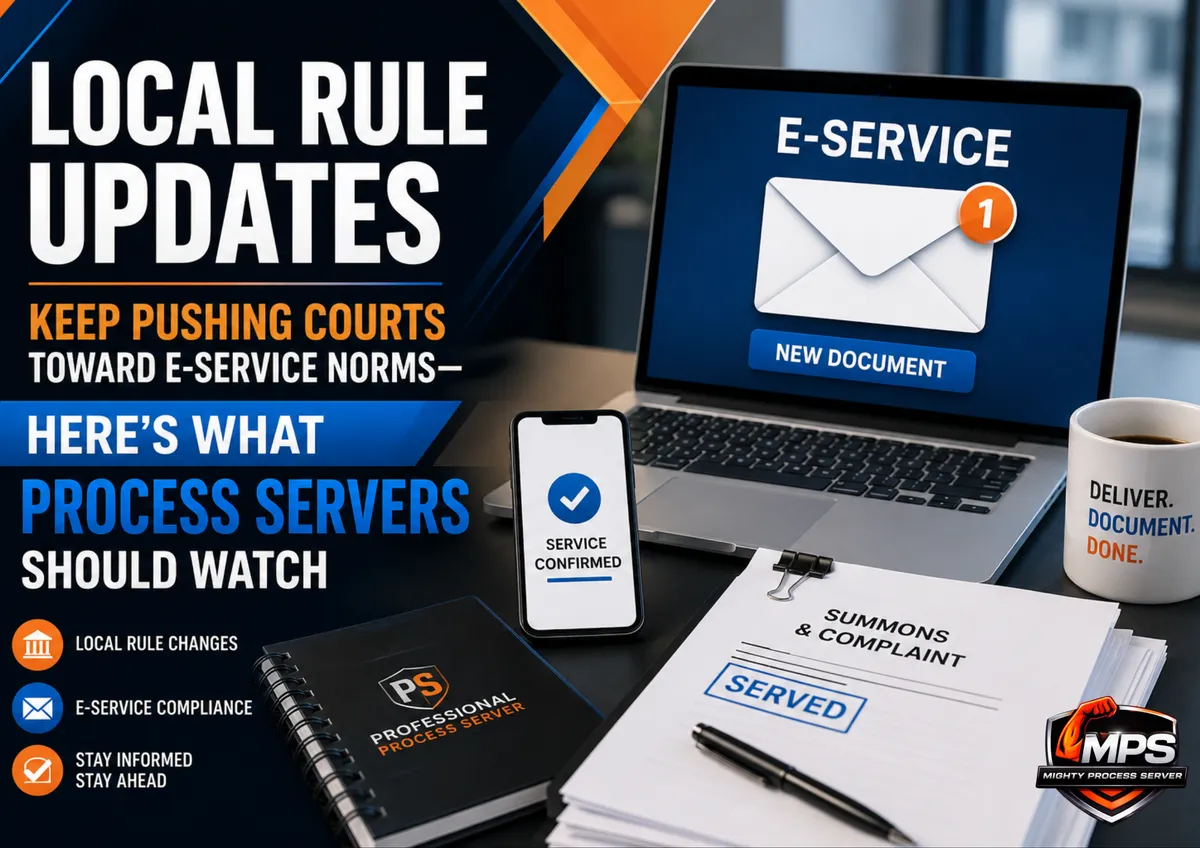
Local Rule Updates Keep Pushing Courts Toward E‑Service Norms—Here’s What Process Servers Should Watch
Courts are becoming increasingly digital, and process servers need to keep pace. From electronic service and filing systems to digital proof-of-service records, evolving court rules are raising expectations for accuracy, documentation, security, and compliance.
 technology
Electronic Service of Process: How to Win Electronic Service Motions and Build a Strong Diligence Record
The legal industry continues to evolve as courts embrace technology that improves efficiency while preserving due process. One of the most significant developments is the growing acceptance of electronic service of process, giving plaintiffs and their attorneys another option when traditional service methods have been unsuccessful.
 industry insights
Build a “Recording-Ready” Safety Protocol (and Use the Law as Your Shield)
Serving legal documents is a critical function within the justice system, but it often places professionals in unpredictable situations. From confrontational recipients to unsafe environments, process servers face unique risks that require preparation, awareness, and proper documentation. Developing strong process server safety protocols is no longer optional. It is an essential part of operating professionally and reducing liability.
 business growth
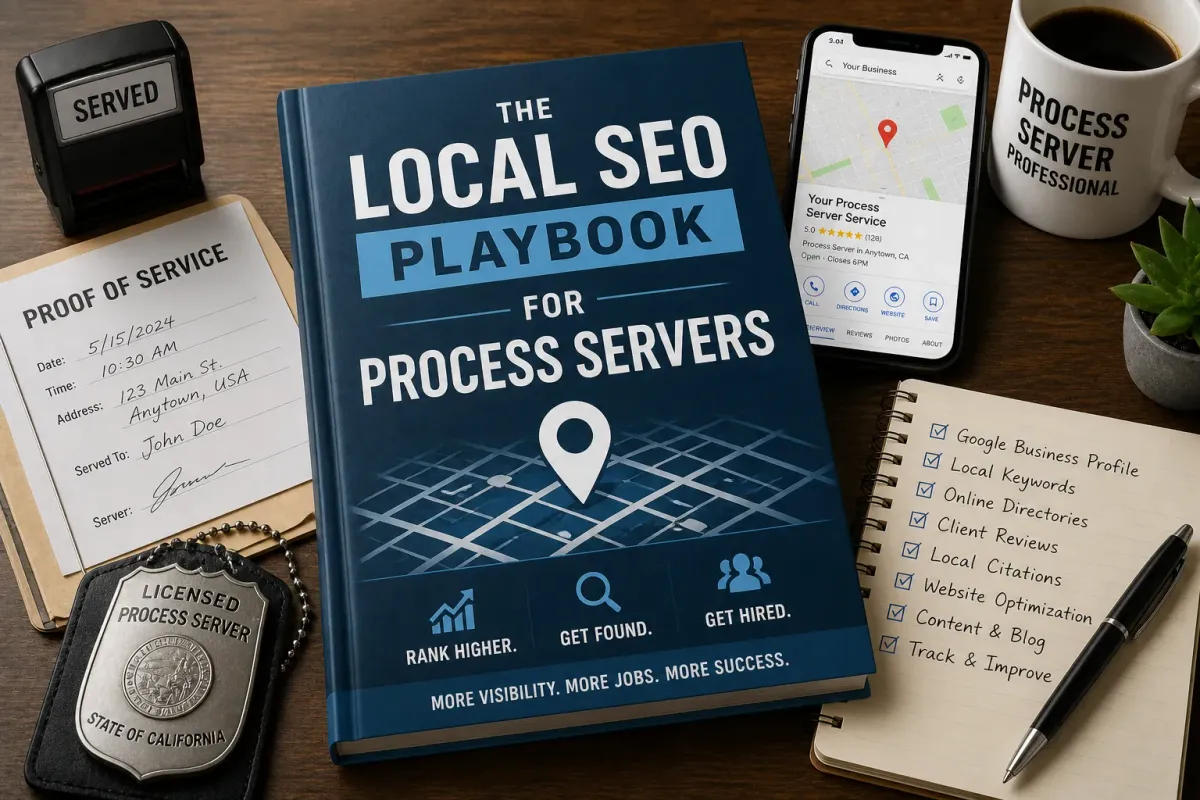
The Local SEO Playbook for Process Servers
In today's competitive legal support industry, success is no longer based solely on completing serves quickly and accurately. The most successful firms combine operational excellence with a strong online presence that makes them easy to find, easy to trust, and easy to hire. This is where local SEO for process servers becomes a critical business growth strategy.
 industry insights
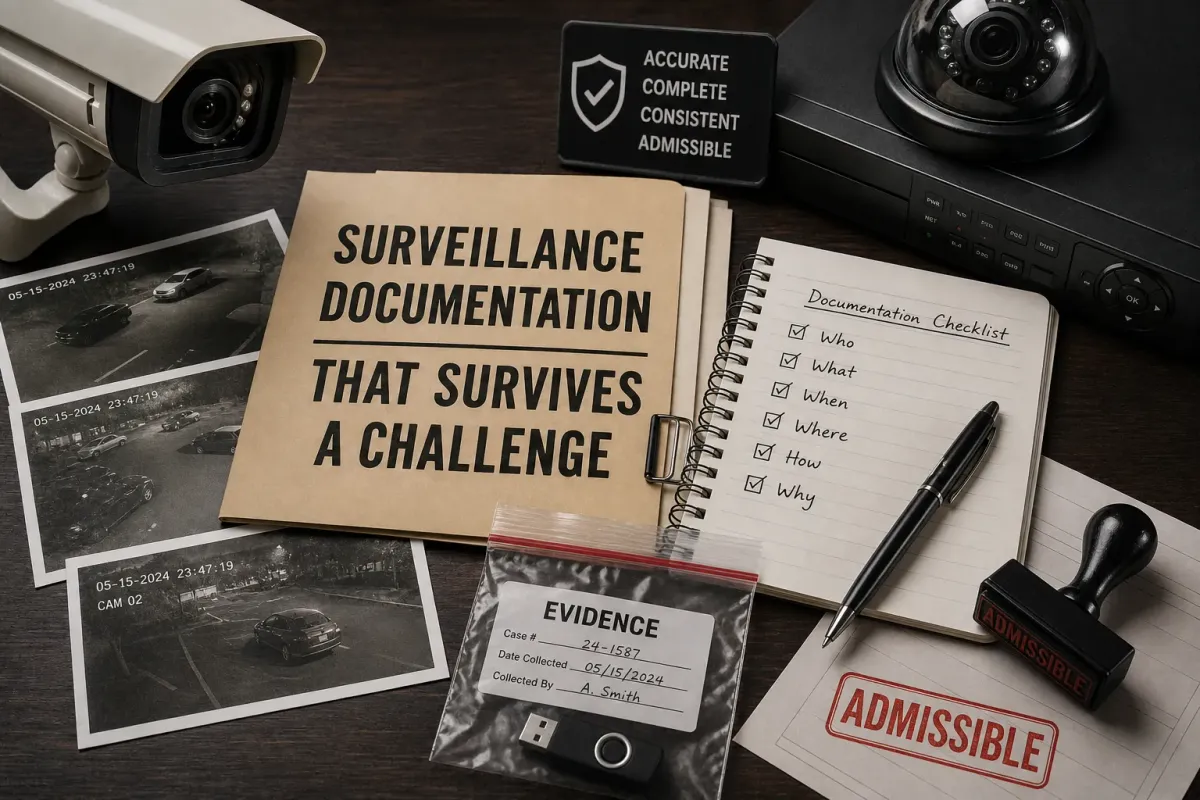
Surveillance Documentation That Survives a Challenge
Investigators are balancing expanding tech capabilities with tighter privacy expectations. We summarize practical guardrails for surveillance documentation, camera use, and license compliance that protect you (and your client) when a case gets challenged.
 process server tips
Three Tactics to Increase Hit-Rate Without Burning Hours
Skip tracing is getting faster, but also noisier. We share three tactics to improve hit-rate: building a repeatable “triangulation” workflow, documenting confidence levels, and using “freshness signals” to avoid stale contact data.
 technology
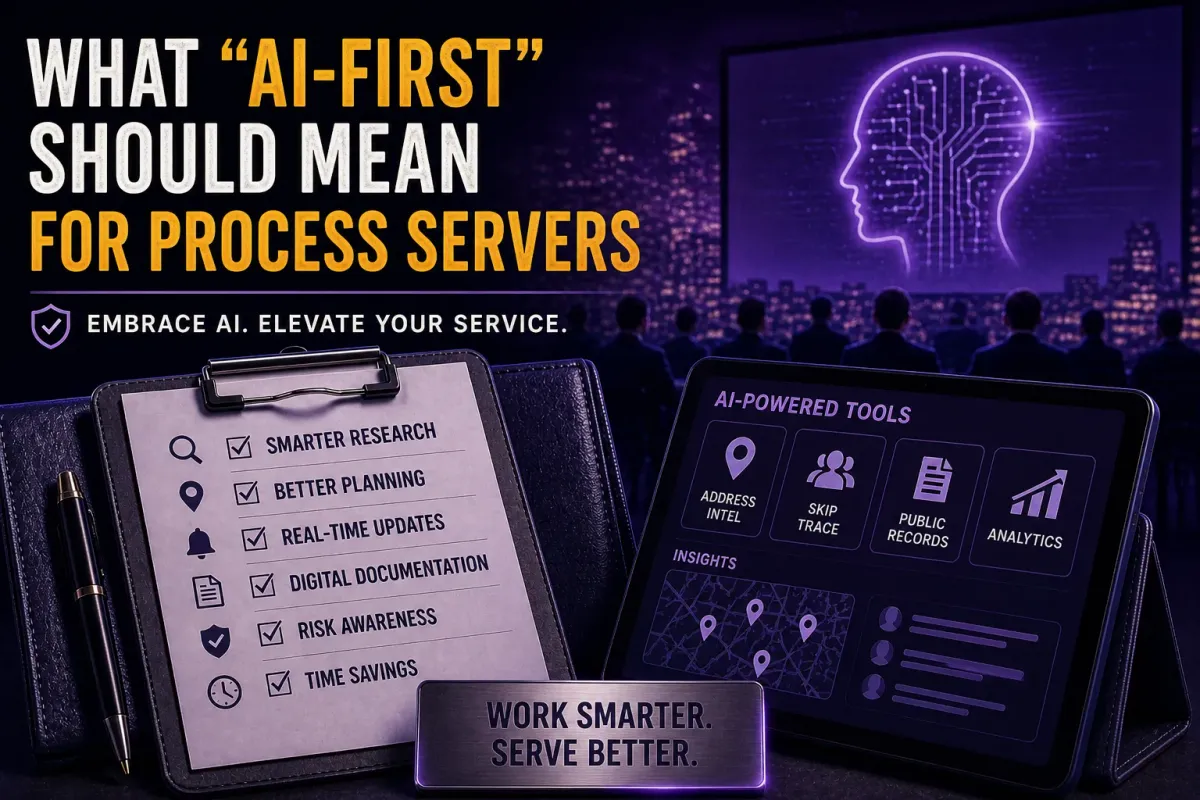
What “AI-First” Should Mean for Process Servers
AI is rapidly reshaping how legal support teams manage data, automate workflows, and detect errors before they become expensive problems. We break down what “AI-first” really means in practical terms for process servers—without falling for hype—and how to use AI responsibly while respecting privacy and court requirements.
 state laws
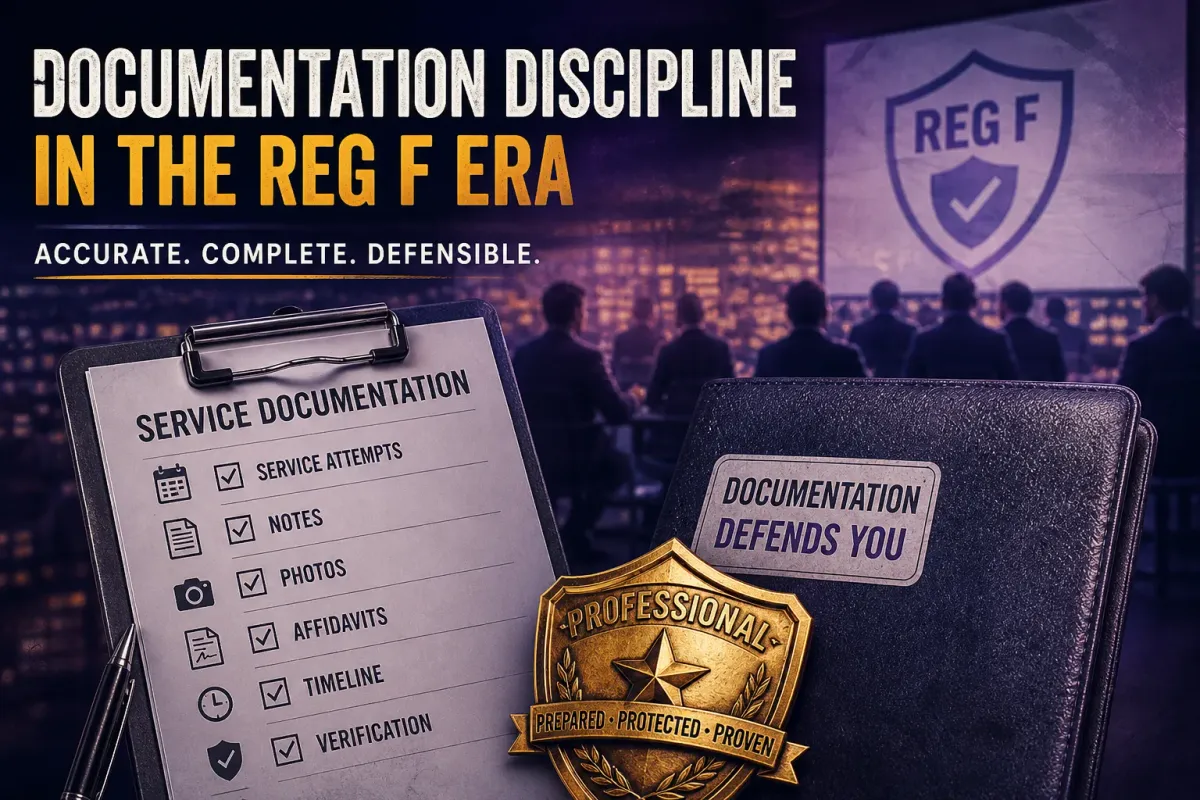
Documentation Discipline in the Reg F Era
Debt collection remains under Regulation F and FDCPA guardrails, but the enforcement landscape is evolving as states expand consumer-style protections to certain commercial debts. We cover the operational implications for servers who support collection dockets: clean validation notice workflows, documentation discipline, and avoiding “sewer service” allegations.
 process server tips
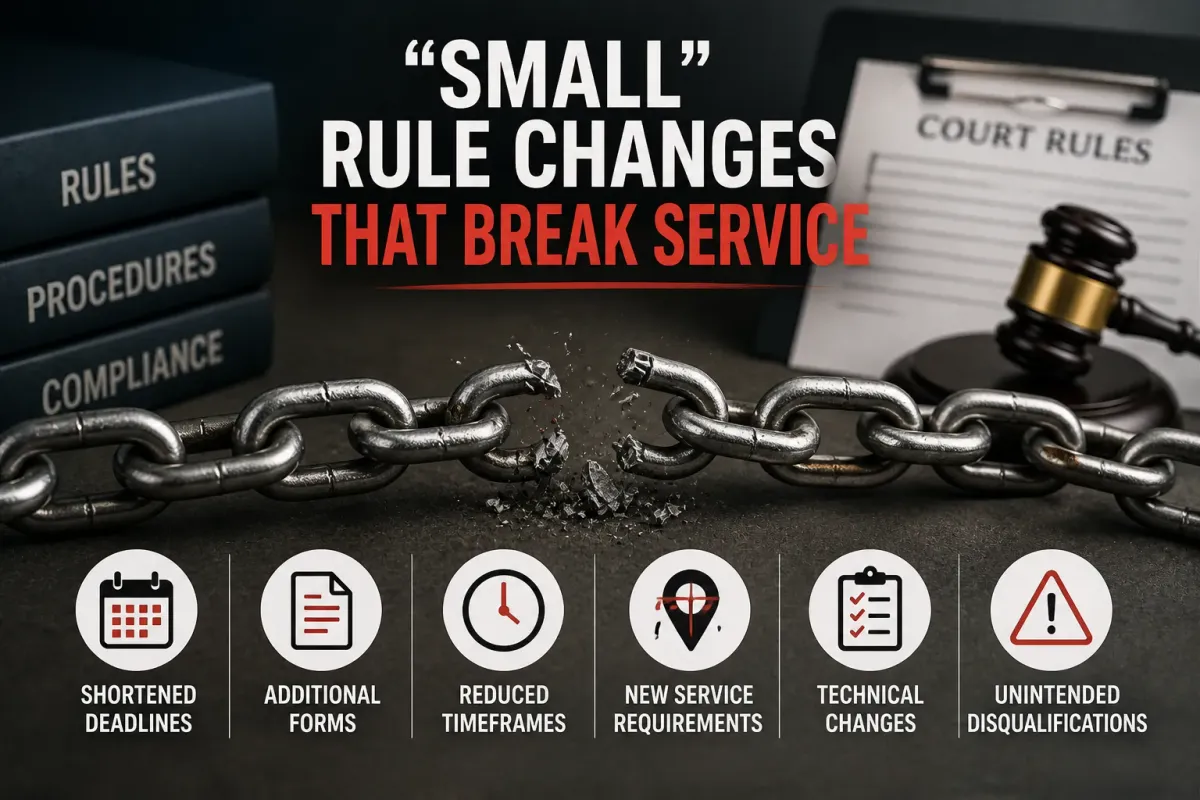
“Small” Rule Changes That Break Service
Service-of-process rules keep shifting at the state level, and “technical” changes can quietly impact your affidavits and success rates. We highlight how recent statutory cleanups and safe-harbor provisions (like Florida’s service-of-process “glitch bill”) can affect substituted service workflows, registered agent hours, and documentation expectations.
 industry insights
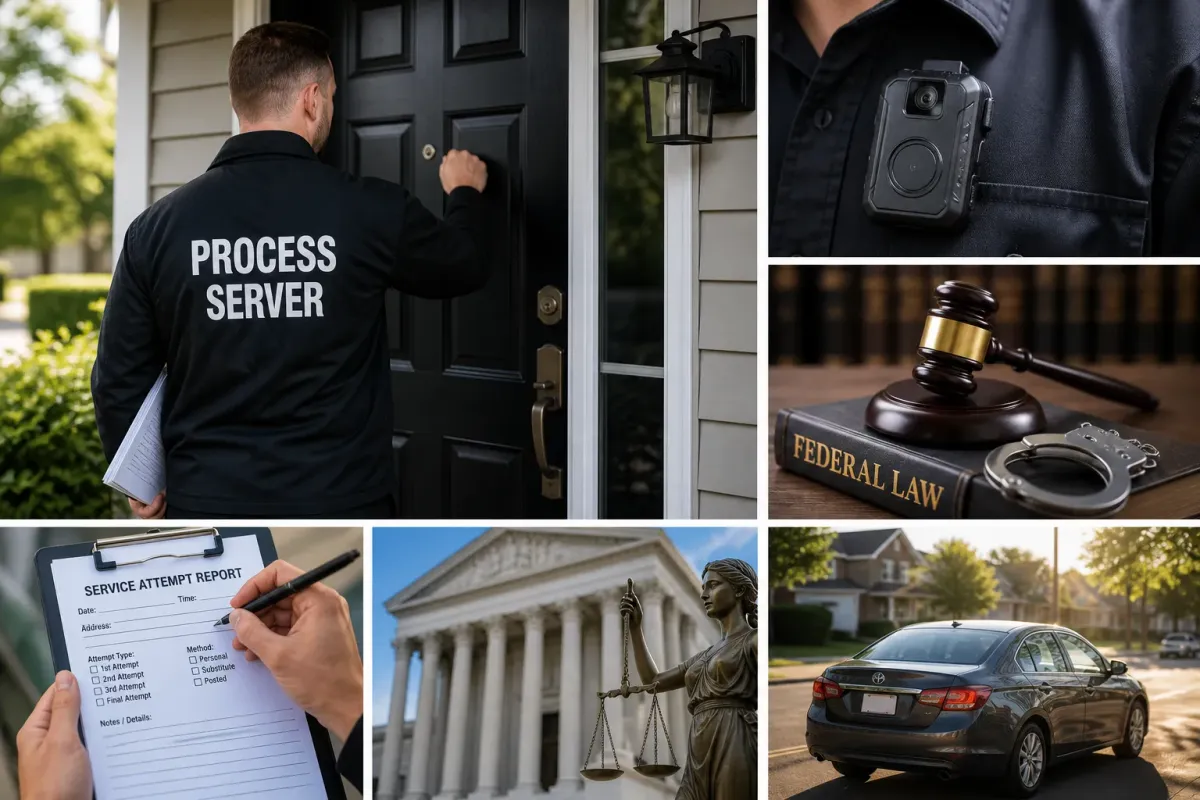
A Practical Safety Standard for Every Attempt
Process servers are working in an environment where a routine doorstep attempt can escalate fast. This week, we revisit why de-escalation training, visible ID, and body-worn cameras are becoming table-stakes in higher-risk serve environments, and we outline a simple “pre-approach” safety checklist your team can standardize before every attempt.
 industry insights
What’s New in the MPS DOL IC Rule? Key Updates for Marketplace Providers
The DOL Independent Contractor Rule remains a major issue for virtual marketplace providers and gig economy businesses. Learn about worker-classification standards, the 2019 DOL opinion letter, potential compliance risks, and what marketplace companies should watch.
 state laws
HB 683 Breakdown: What CCP Art. 1293 and 1355 Changes Mean for Louisiana Process Servers
Louisiana HB 683 proposes major changes to CCP Art. 1293 and 1355, including expanded private service, removal of the sheriff-first waiting period for subpoenas, and elimination of notarized subpoena returns. Here's what Louisiana process servers and law firms need to know.
 news updates
NAPPS Cleveland April 23–25: Free Marketing That Drives Real Results
NAPPS 44th Annual Conference — Cleveland, April 23-25 (hotel block deadline April 1). Software comparison and the $0 Marketing Playbook.
 industry insights
5 Bills That Can Kill the PI Industry — and What You Should Be Doing About It
Privacy laws, surveillance restrictions, licensing requirements, and digital data regulations could reshape the private investigation industry. Here are five major legislative threats PIs and process servers should watch and what industry professionals can do to prepare.
 state laws
Supreme Court Closes a Loophole: Time Limits Now Apply to Void Judgment Challenges
SCOTUS ruled 8-1 in Coney Island Auto Parts v. Burton — time limits now apply to void judgment challenges. Bulletproof documentation matters more than ever.
 industry insights
CFPB Steps Back, Lawsuit Filings Surge, and What It Means for Your Pipeline
CFPB slashed to fewer than 70 virtual-only exams in 2026 (down about 90%). FDCPA filings +26.5% YoY, FCRA +47.5% YoY. More lawsuits = more summons in the pipeline.
 state laws
Three Laws That Should Be on Every Process Server's Radar Right Now
Three new legislative developments. Louisiana HB 683 eliminates notarized returns and the sheriff-first waiting period. Michigan's Drew's Girl Productions v. Hill — a text message is not proof of service. California AB 1742 targets building gatekeepers.
 process server tips
Top 5 Skip Tracing Databases for 2026 — Plus Free Techniques That Actually Work
Discover the top 5 skip tracing databases for 2026, including TLOxp, Tracers, Accurint, IRBsearch, and idiCORE. Compare leading tools and learn free skip tracing techniques process servers and investigators can use to locate hard-to-find individuals more efficiently.
 process server tips
Body Cameras Are No Longer Optional: What a Viral Attack Taught the Profession
A body cam video of a process server being attacked went viral March 11 (@divorcerealtormaryj). The footage was used as court evidence. We cover top cameras for 2026, OSHA's new workplace violence standards, and a safety checklist.
 news updates
NYC Rewrites the Debt Collection Playbook — And the CFPB May Not Be Around to Enforce Federal Rules
NYC is raising the compliance bar for debt collection while uncertainty surrounds the future of CFPB enforcement. Learn what changing debt collection regulations mean for process servers, attorneys, collection agencies, and legal service providers—and why accurate documentation is more important than ever.
 technology
AI in Process Serving: Why Technology Adoption Is Becoming Essential for Modern Process Servers
AI is transforming process serving through smarter routing, automation, skip tracing support, documentation, and data analysis. Learn how process servers can use emerging technology to improve efficiency while protecting accuracy, privacy, and compliance.
 industry insights
SKIP TRACING GOES FEDERAL — ICE Awards $281M in Nationwide Contracts
ICE's nationwide skip tracing initiative is putting new attention on the tools used to locate people. Here's what the federal contracts, AI technology, privacy debate, and growing regulatory scrutiny could mean for process servers and private investigators.
 industry insights
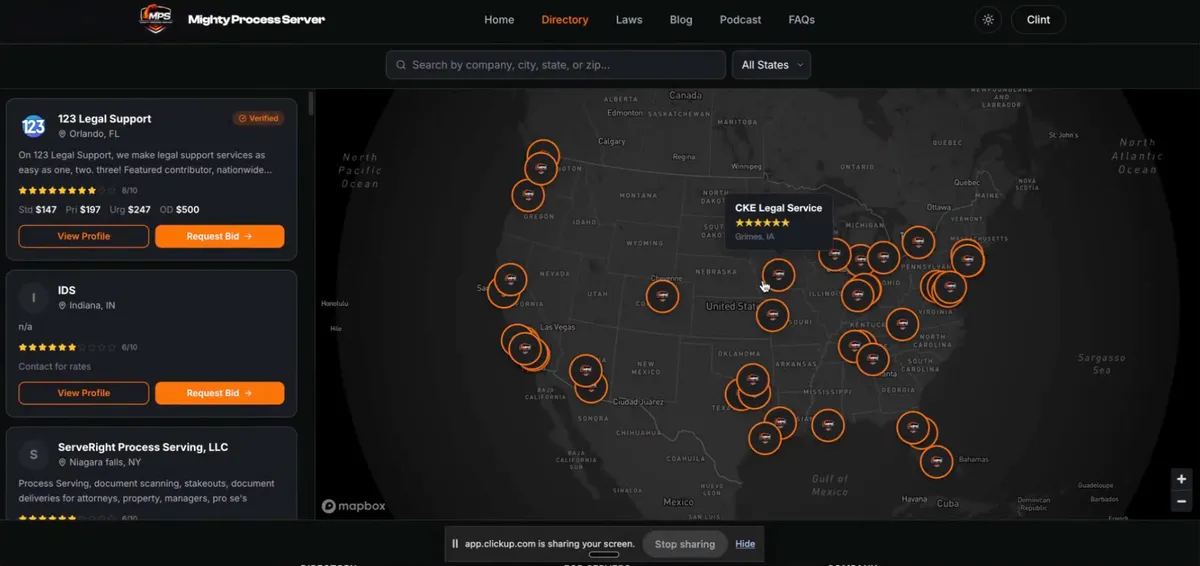
Mighty Process Server Launch & Directory
Discover the new Mighty Process Server platform, offering tools, resources, and a directory for legal process serving. Streamline your legal operations today.
 industry insights
COLLECTION AGENCIES VS. PROCESS SERVERS — The Fight Over Due Process
Debt collection lawsuits depend on proper service of process. As Congress considers H.R. 2704 and the CFPB reviews debt collection oversight, process servers remain a critical safeguard against improper default judgments and sewer service.
 industry insights
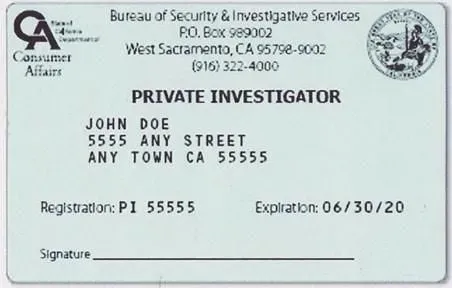
PRIVATE INVESTIGATOR LEGISLATION — New Bills Target PI Practices in 2026
Private investigator laws are evolving in 2026, with new proposals addressing training, confidentiality, licensing, privacy, and professional conduct. Here's what PIs and process servers should know about developments in California, South Carolina, Oregon, and the broader investigation industry.
 state laws
Can You Serve Legal Papers Across State Lines?
Yes, legal papers can generally be served across state lines, but specific requirements vary by court and jurisdiction. Learn how interstate service of process works, why local process servers are often used, and what to know before serving documents in another state.
 industry insights
PROCESS SERVER SAFETY — Where Do We Stand on Assault Protections?
Process servers face unpredictable situations while delivering legal documents, yet enhanced assault protections remain limited across the United States. This 2026 guide examines process server safety, current assault protection laws, federal protections, common risks, and practical steps servers can take to stay safer in the field.
 news updates
California Electronic Service of Process Law (SB 85) Explained
California's SB 85 is now in effect as of January 1, 2026, allowing electronic service of summons by email when traditional methods are exhausted. Virginia SB189, which just passed both chambers on March 6, 2026, requires attorneys in consumer debt collection cases to include full identification in all filings — a win for transparency. Federal Rules of Civil Procedure were updated December 1, 2025, with new Rule 16.1 for multidistrict litigation. Ohio now permits defendants to waive service under amended Civil Rule 4(D).
 industry insights
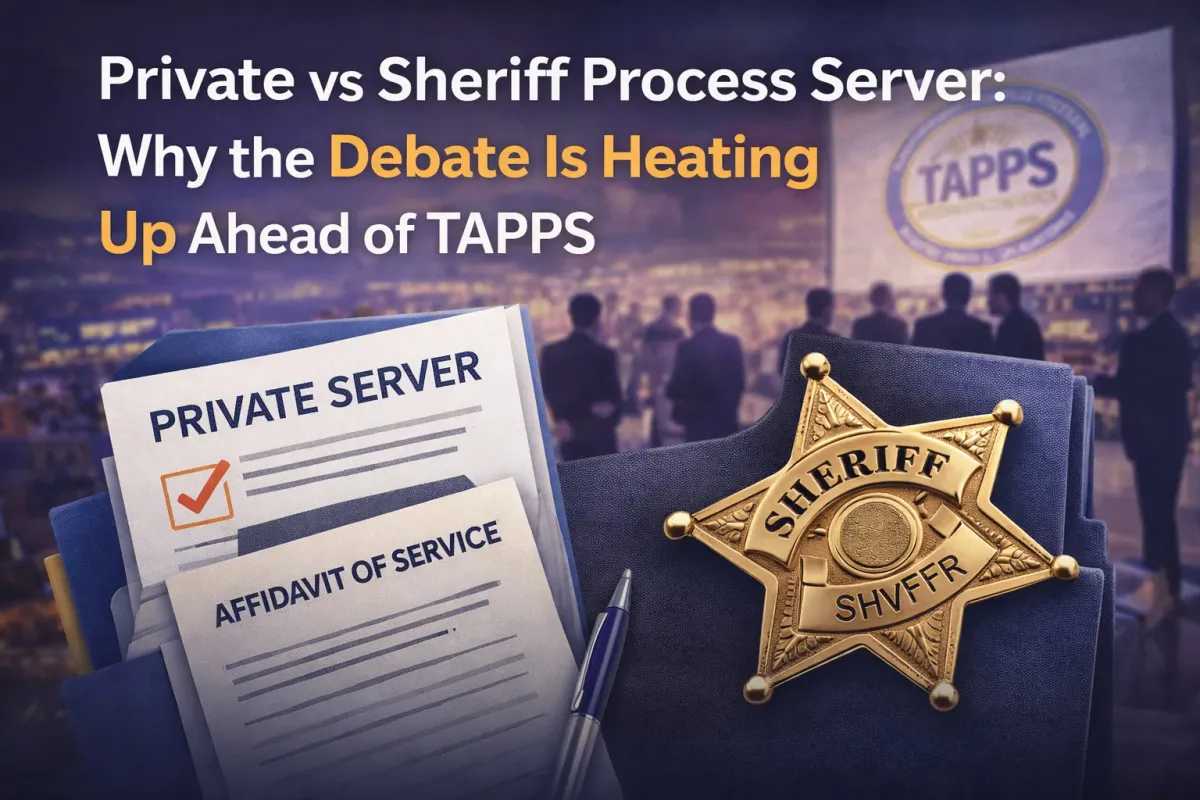
Private vs Sheriff Process Servers: Key Differences
Explore the debate on private vs sheriff process servers, focusing on costs, efficiency, and regulations ahead of the TAPPS conference.
 industry insights
Mike Lindell Served Legal Docs Live: Process Server Rules
Mike Lindell served live on air! Explore process server rules, valid service laws, and state regulations for serving legal documents.
 industry insights
AB 2042: Impact on CA Process Servers
Discover the impact of AB 2042 on California process servers and legal updates. Learn how to prepare for new regulations and industry changes.
Find a Process Server Today
Connect with verified, experienced process servers across all 50 states through our directory.
Browse Directory